
Unloading at Drill Site
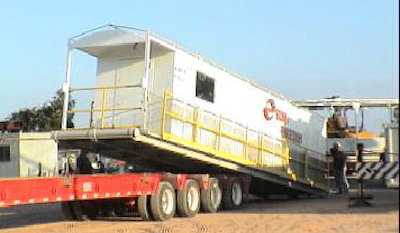
During this phase of site preparation, drilling rig components, support equipment, and associated materials are unloaded from trucks and trailers and staged in approximate positions where they will later be assembled during rig-up. Equipment may include substructures, engines, pipe racks, tanks, the doghouse, and other heavy or oversized loads.
Unloading operations typically involve cranes, forklifts, winches, or other lifting devices and require close coordination between equipment operators and ground personnel. Because these activities often occur early in the project, site conditions such as uneven ground, limited space, and ongoing traffic can increase the risk of injury if proper controls are not in place.
Potential Hazards
- Improperly secured or shifted loads that may slide, tip, or fall during unloading operations.
- Struck-by hazards from suspended loads, swinging equipment, or shifting materials.
- Caught-in or pinch-point hazards while guiding loads into position.
- Equipment instability due to uneven ground or inadequate blocking and cribbing.
- Poor communication between operators and ground personnel.
Possible Solutions
- Inspect loads, tie-downs, chains, and rigging before loading or unloading to ensure they are secure and in good condition.
- Establish exclusion zones and keep non-essential personnel clear of unloading operations.
- Use trained and qualified operators for cranes, forklifts, and other lifting equipment.
- Maintain clear communication through hand signals, radios, or a designated signal person.
- Ensure equipment is placed on stable, level ground and properly blocked to prevent movement.
- Require appropriate Personal Protective Equipment (PPE), including hard hats, safety-toe boots, gloves, and high-visibility clothing.
Knowledge Check Choose the best answer for the question.
1-8. According to the text, when should loads be inspected?
You forgot to answer the question!