
Rat Hole
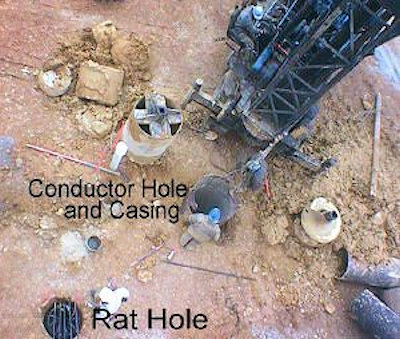
A rat hole is a vertical, temporary storage space drilled near the wellbore and typically extends approximately 30 to 35 feet below the rig floor. The hole is lined with steel casing that projects above the rig floor to prevent collapse and to clearly identify its location. The rat hole is used to store the kelly and swivel when they are not connected to the drill string.
The rat hole may be drilled by a portable rig during conductor hole operations or by the primary drilling rig after rigging up on location. During storage, the kelly is carefully lowered into the rat hole until the upper kelly valve rests on top of the casing, keeping the assembly secure and out of the active work area.
Potential Hazard
- Falling or stepping into an uncovered or inadequately protected rat hole, particularly during rig-up, rig-down, or low-visibility conditions.
- Struck-by or pinch-point hazards while lowering or removing the kelly from the rat hole.
Possible Solutions
- Keep the rat hole securely covered or barricaded at all times when it is not actively in use, especially during rigging-up and rigging-down operations.
- Ensure casing extends above the rig floor and is clearly marked to improve visibility and hazard awareness.
- Use proper lifting and handling procedures when lowering or retrieving the kelly from the rat hole.
- Provide adequate lighting around the rig floor to reduce the risk of trips and falls.
Knowledge Check Choose the best answer for the question.
1-5. What is the primary hazard associated with the rathole?
You forgot to answer the question!