
Conductor Hole and Pipe
A conductor hole is a large-diameter starter hole drilled or excavated at the beginning of a drilling operation. It is typically lined with heavy steel pipe known as conductor casing. The primary purpose of the conductor hole is to stabilize the upper portion of the borehole and prevent the surrounding soil or unconsolidated material from collapsing during early stages of drilling.
The depth of a conductor hole can vary widely depending on local geology, soil conditions, and regulatory requirements. In stable formations, the hole may extend only a few tens of feet, while in loose, sandy, or water-bearing formations, the conductor hole may be drilled several hundred feet deep. The conductor casing also helps isolate shallow groundwater zones and provides a stable foundation for subsequent drilling equipment.
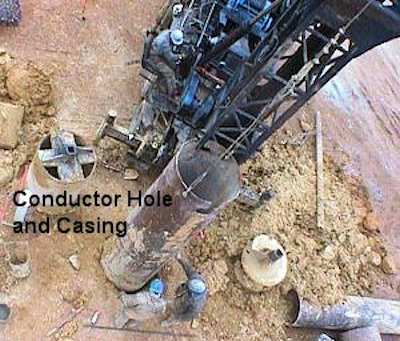
Some sites do not require a conductor hole. In areas with competent bedrock or stable surface conditions, drilling may begin directly without installing conductor casing. The decision to use a conductor hole is based on site-specific geological conditions, safety considerations, and project requirements.
Potential Hazards
- Being struck by hoisting lines, suspended drill tools, or conductor casing during lifting and placement operations.
- Pinch points and crush hazards when positioning or aligning casing sections.
- Struck-by hazards from swinging loads due to wind, improper rigging, or sudden equipment movement.
Possible Solutions
- Wear appropriate Personal Protective Equipment (PPE), including hard hats, safety glasses, safety-toe boots, high-visibility clothing, and work gloves.
- Establish and enforce exclusion zones around hoisting and casing installation activities to keep non-essential personnel clear of suspended loads.
- Use proper lifting techniques, inspected rigging, and clear communication (hand signals or radios) between the equipment operator and ground personnel.
- Ensure all employees involved are trained in safe hoisting and casing installation procedures.
Knowledge Check Choose the best answer for the question.
1-4. What is a potential hazard when working around the conductor hole?
You forgot to answer the question!