
Planning the EMS (Steps 6-12)
Step 6: Determine Environmental Aspects and Impacts
The ISO 14001 standard obliges organizations to establish a process for identifying and analyzing environmental aspects of activities, products, and services that have or may have an impact on the environment and that may be affected by the organization in every phase of their life cycle.
ISO 14001 Aspects & Impacts Simplified
In ISO 14001, this is called a "life cycle perspective." It means looking at all the connected stages of a product's life, often called "cradle to grave," to find environmental aspects the organization can control or influence.
The purpose of determining environmental aspects and impacts is to improve the relationship between the environment and the effects of the organizations performance. To determine environmental aspects and impacts, it's important for them to address specific organization activities of concern because they could present a environmental risk.
Activities
An activity of concern is any action or operation carried out by workers as part of normal job duties that could result in a risk to the environment. This includes production, maintenance, handling, cleaning, transportation, or any other task that supports business operations.
Aspects
An aspect is any element of an activity of concern that interacts with the environment. It includes any aspect of the activity that can cause a change to air, water, land, resources, or ecosystems.
The EMS team should carefully consider both routine activities and those that might happen during non-routine or emergency situations. When listing environmental aspects and impacts, consider the organization's operations that involve:
- Emissions to air – such as from vehicles, machinery, or heating systems
- Releases to water – including discharges into drains, streams, or sewers
- Releases to land – such as spills or leaks that affect soil or ground
- Use of natural resources – like water, minerals, or raw materials
- Use of energy – including electricity, fuel, or other power sources
- Generation of waste – from manufacturing, packaging, or office operations
Manufacturing
- Emissions from production processes, such as air pollutants from machinery.
- Waste generation, including hazardous materials from fabrication.
- High energy consumption for operations like heating and powering equipment.
Construction
- Dust and particulate emissions affecting air quality during site preparation.
- Soil and water contamination from runoff and spills of fuels or materials.
- Resource depletion through excessive use of aggregates and timber.
Agriculture
- Soil erosion and degradation from intensive tillage and monocropping.
- Water overuse for irrigation leading to aquifer depletion.
- Pesticide runoff polluting waterways and harming biodiversity.
Healthcare
- Generation of biohazardous and medical waste requiring specialized disposal.
- Energy-intensive operations, such as HVAC systems in hospitals.
- Water consumption for sterilization and sanitation processes.
Oil and Gas
- Greenhouse gas emissions from flaring and venting during extraction.
- Risk of oil spills contaminating marine or soil environments.
- High freshwater use in hydraulic fracturing operations.
Prioritizing Aspects
Once environmental aspects are identified, the organization must prioritize them by assessing the probability and degree of impact the risk has on the environment. This step allows the organization to focus on those aspects that present the greatest environmental risk.
An EMS Risk Matrix is a useful tool for assessing the degree of risk identified aspects have on the environment. The process may be simple to complex depending on the nature of the activities being evaluated.
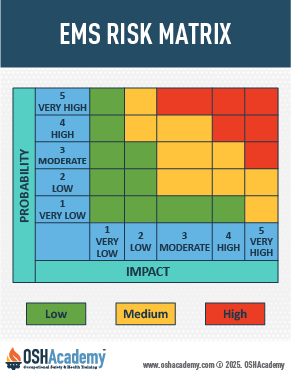
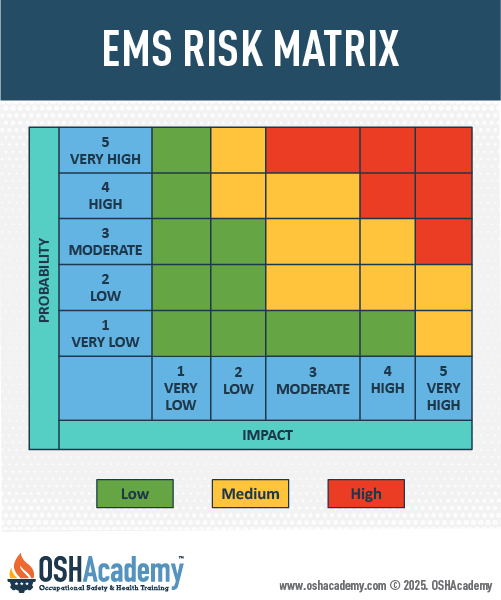
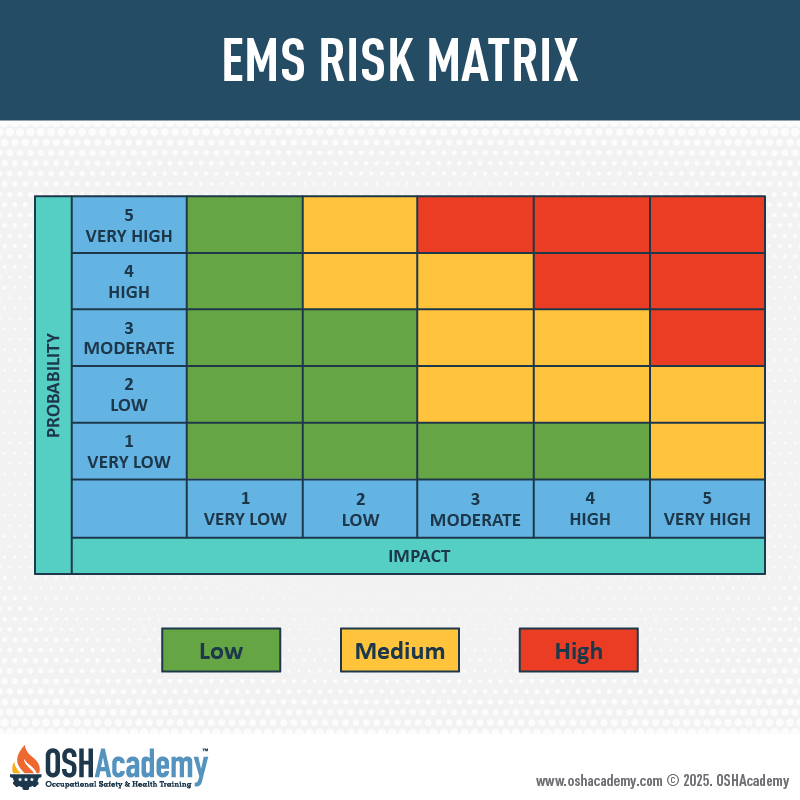
- First, the probability that an aspect will impact the environment is assessed.
- Next, the severity or degree of impact on the environment is assessed.
Those aspects with the highest probability and degree of impact on the environment should be the first to be addressed.
Prioritization is done by ranking each aspect using a predetermined set of criteria. This ranking helps the organization determine which aspects are considered "significant" and require focused management within the Environmental Management System (EMS).
Examples Ranking Criteria
- Actual or Potential Environmental Impact: The organization evaluates how severe the environmental damage could be if the aspect is not managed. For example, a hazardous chemical spill near a water source poses a greater impact than paper waste in an office setting.
- Costs Associated with Addressing the Aspect or Impact: The organization considers the financial resources required to control the aspect. For example, upgrading outdated air filtration systems might involve high upfront costs but reduce air pollution over time.
- Pollution Prevention Potential: The organization examines whether managing the aspect can prevent pollution. For example, replacing solvent-based paints with water-based alternatives can lower Volatile Organic Compounds (VOC) emissions and improve air quality.
- Community Concerns: The organization accounts for concerns expressed by the surrounding community. For example, if residents near a facility report frequent noise or odor issues, those aspects may be ranked higher due to public pressure or reputational risk.
Knowledge Check Choose the best answer for the question.
3-1. The effects of company's activities on the environment are called environmental _____.
You forgot to answer the question!