
Planning the EMS (Steps 1-5)
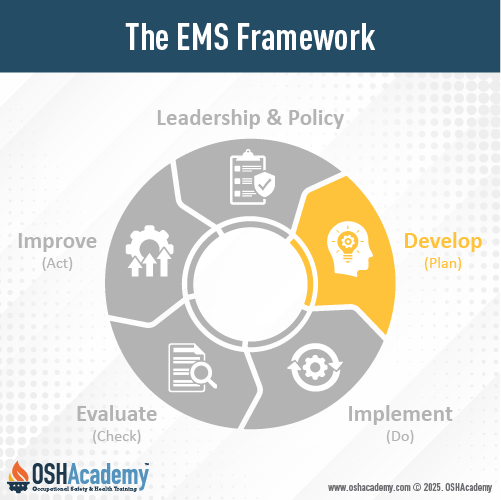
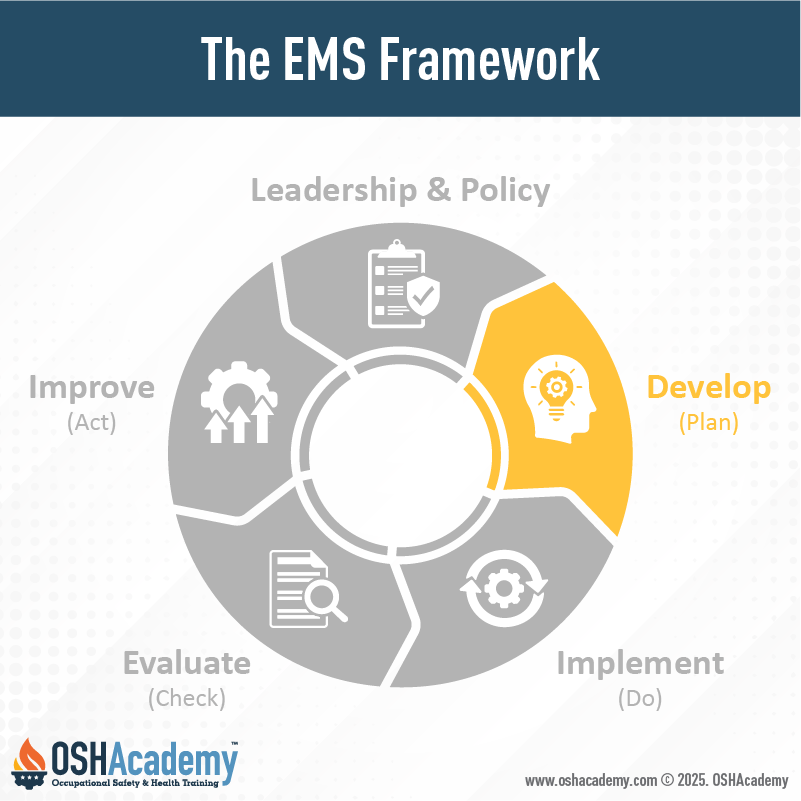
Modules 2 and 3 will cover the first 12 planning steps in the Environmental Protection Agency (EPA) EMS development framework process we discussed in the previous module. These steps align with the Continuous Improvement Plan-Do-Check-Act (PDCA) Plan Phase.
Step 1: Explore the Context of the Organization
Before beginning to set up an Environmental Management System (EMS), it is important for an organization to understand the key factors that will affect how the EMS is designed and what it will focus on. The unique nature of the activities, products, and services help to define the "context of the organization". An organization attempting to comply with the requirements of ISO 14001 must be able to demonstrate it is fully aware of all relevant environmental issues and their potential impact and importance. Since every organization is different, each one must clearly identify what it wants to address and what goals it hopes to achieve. This helps make sure the EMS is useful and brings value to the organization.
The ISO 14001 standard includes four main areas that guide this part of the process:
- Understanding the organization’s context
- Identifying the needs and expectations of interested parties
- Deciding on the scope of the EMS
- Following the overall EMS requirements
To best understand the context of the organization, a clear and honest review of how the organization manages its environmental responsibilities must be conducted. It includes looking at both internal and external factors that may affect how the organization meets its environmental goals and how these factors can influence its overall success.
Below are sources of information that should be reviewed when determining internal and external factors:
- Mission and vision statements: These show the organization’s overall purpose and long-term goals. Reviewing them helps make sure the EMS supports the organization’s core values and future direction.
- Strategic plans: These documents outline business goals and plans for growth. They can show how environmental performance fits into the organization’s long-term planning and priorities.
- Historical performance data: Reviewing past environmental data, such as waste generation or energy use, helps identify trends, strengths, and areas needing improvement.
- Information on local and regional environmental conditions: Understanding local issues such as air or water quality, natural resource limits, or climate risks can help the organization plan actions that reduce negative impacts on the environment.
- Legal requirements: These include local, state, and federal environmental laws and regulations. Meeting legal obligations is critical to avoid fines and protect the organization’s reputation.
- Customer requirements: Some customers may expect suppliers to meet certain environmental standards. Meeting these expectations can improve business relationships and market opportunities.
- Benchmarking: This is the process of comparing the organization’s performance with others in the same industry. It can help identify where the organization stands and highlight areas for improvement.
- Best practices: These are proven methods used by other organizations to achieve strong environmental results. Learning from best practices can improve efficiency and reduce environmental impacts.
It is important for top leaders in the organization to take part in this process to ensure a full understanding of the environmental situation and support strong decision-making.
Identify All Interested Parties
Focusing on stakeholders, the organization must determine who is interested in or affected by its decisions or activities related to environmental management and what these interested parties, internal and external, need or expect from the organization. Examples of interested parties are listed in the dropdown below.
| Interested Party | Need/Expectation |
|---|---|
| Local or Federal Government | Compliance with environmental regulations |
| Neighbors | Disclosure about local environmental impacts |
| Employees or Contractors | Safe and healthy workplace |
| Customers/Public | Sustainability reporting, disclosure about impacts, environmentally friendly supply chain |
| Shareholders | Environmentally friendly image |
No distinct list will be appropriate to all organizations. The organization must develop its own methods to investigate relevant environmental issues and their potential impact and importance.
This exercise requires the organization to explore a variety of questions, such as:
- Do we need to improve environmental performance?
- Are we in full compliance with laws and regulations?
- Do we want to prevent pollution and reduce environmental hazards (e.g., toxic waste and hazardous chemicals)?
- Do we want to improve our organization's reputation?
- What are the internal and external issues that are most relevant to our organization?
- Air quality, climate change, water quality, land use change and contamination?
- Other issues: cultural, social, political, economic, financial and/or regulatory?
- The organization’s activities, products, services, culture, capabilities, and strategic direction?
Knowledge Check Choose the best answer for the question.
2-1. Which of the following best describes the context of the organization in an EMS?
You forgot to answer the question!