
Implementing the EMS (Steps 13-17)
These steps apply when establishing an EMS for the first time, as well as when maintaining an existing EMS and striving to continually improve it over time.
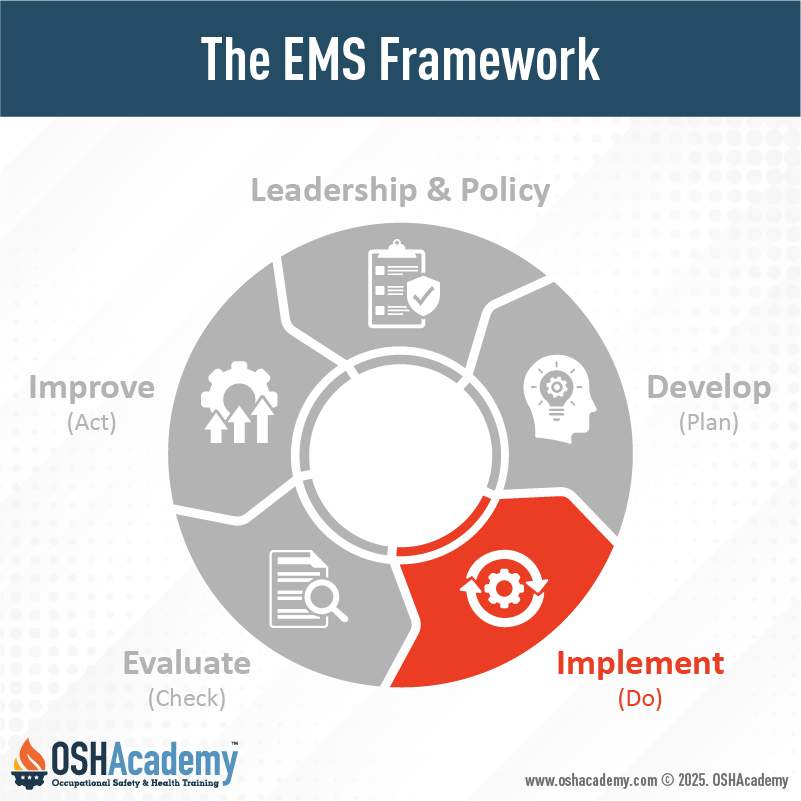
If the organization has already established an EMS, this phase may only involve determining whether any changes have occurred since initial EMS development and carrying out new plans or procedures.
Step 13: Providing Awareness Training
Organizations should provide EMS awareness training to employees and consider extending it to others who work on site, such as contractors. The training should:
- Provide an overview of the organization’s environmental policy, its EMS efforts, and any new or modified procedures employees must follow.
- Identify the organization’s environmental objectives, describe progress made in achieving them, and share success stories.
- Help employees understand how their everyday actions impact the organization’s environmental performance and what they can do to positively contribute to the EMS.
The EMS team may wish to include a competency component such as a quiz to ensure that participants are engaged and understand the content of the training. This is especially important for employees who interact with significant environmental aspects. Building a successful EMS is a team effort – organizations that inspire their employees to be responsible environmental stewards will reap the benefits.
EMS education and training are key activities for implementation.
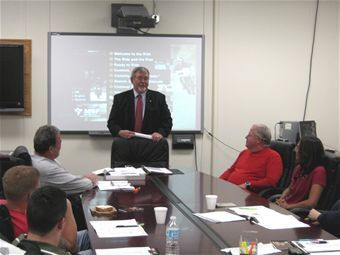
EMS education is usually online or classroom instruction. The goal of EMS education is to help employees become aware of key EMS concepts and why it is important to the success of the organization.
EMS training may be online, in the classroom, or hands-on instruction. The primary goals of EMS training is to teach employees how to do something.
Be sure employees demonstrate the necessary skills to safely perform tasks by using on-the-job (OJT) training. The OJT method is very important for any procedure that might cause an injury, illness or property damage. You can learn more about this training method in OSHAcademy course 723 Conducting OSH Training.
Because EMS concepts are new to many employees and impact their daily activities, you can't expect success unless you teach them about our EMS and what they can and must do to support it.
Job-specific training is tailored to job types to ensure that workers understand the significant environmental aspects of their job functions and the potential impacts of not following EMS instructions. The training also reviews the benefits of improved environmental performance. For example, such training may include instruction on how to manage hazardous waste properly. Where EMS objectives and targets require changes to equipment or operations, workers also need to be trained regarding the changes required in how they perform their jobs.
For more information on training, be sure to check out OSHAcademy courses 703 Introduction to OSH Training, 721 OSH Training Development, or 723 Conducting OSH Training.
Communicating EMS Policy
This requirement is a subset of the ISO 14001 section Training, Awareness and Competence.

- understand and recognize EMS commitments
- be able to relate how their job function interacts with the Environmental Policy statement
ISO 14001 encourages communication with external stakeholders. When a complete Environmental Policy statement is crafted by the organization, an opportunity is created to discuss openly the organization's Environmental Objectives. These objectives, along with mission and core values of the organization, have the potential to foster an open dialogue with outside parties.
View sample EMS Policy Statements developed by the New Hampshire Department of Environmental Services.
Knowledge Check Choose the best answer for the question.
4-1. Why is on-the-job (OJT) training especially important in EMS instruction?
You forgot to answer the question!