
Evaluating the EMS (Steps 18 - 22)
The information in this module covers the five steps in the "CHECK" process.
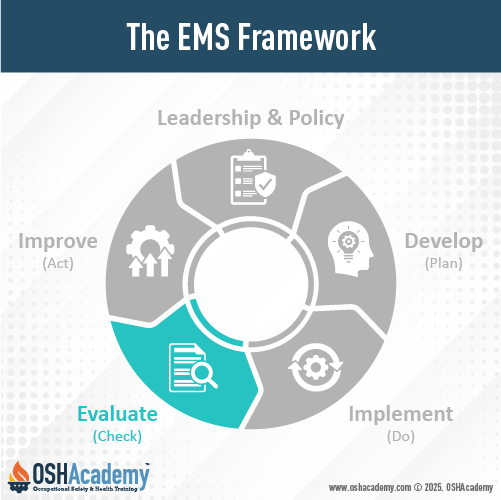
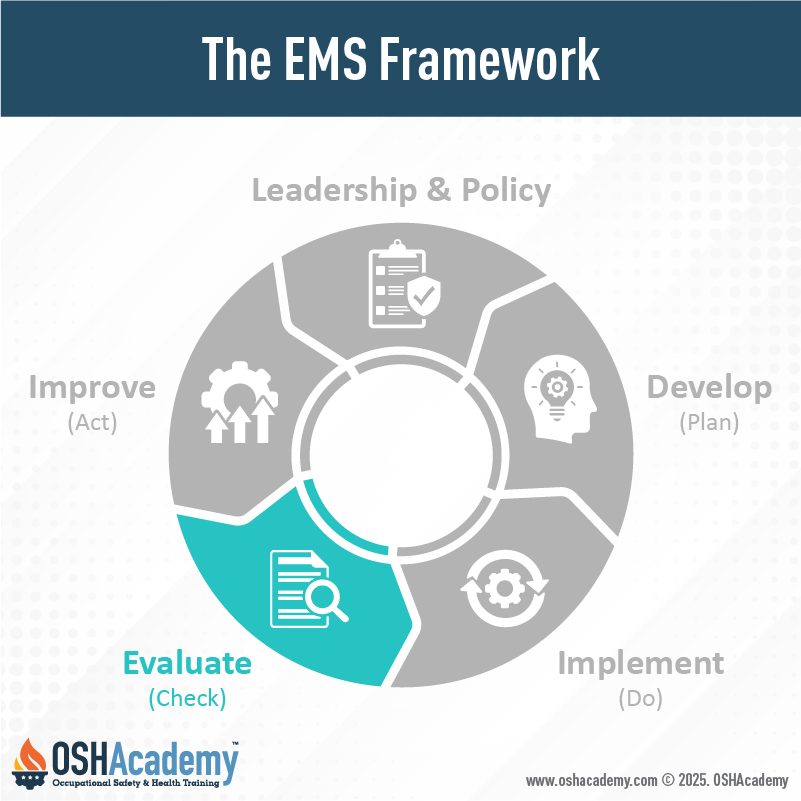
The tasks described in the "PLAN" and "DO" phases should be completed prior to implementing these steps. For example, the organization may monitor the efficacy of the selected approach; assess environmental performance; and review existing plans, procedures, and programs to determine how well they are working.
Step 18: Monitor, Measure, and Document
Monitoring and Measurement
Monitoring and measuring allow organizations to assess whether they are meeting their commitments and environmental objectives.
The activities empower organizations to be proactive in identifying potential problems or weaknesses and mitigating them before they blossom into bigger problems or have larger negative impacts on the environment.
During this step, organizations evaluate process and outcome "environmental indicators," which are measurable metrics that provide information on the status of operations.
- Process Measures: These measures are associated with activities in the EMS process, such as the amount of material used per production unit or the energy required for a specific activity. They are considered proactive because they focus on activities and conditions that happen before or during a process. By monitoring these "leading indicators," an organization can detect potential problems early and take action before issues occur. Examples include:
- The number of employees trained in spill prevention helps reduce the chance of future spills.
- The frequency of equipment maintenance helps prevent leaks or breakdowns.
- The volume of hazardous materials ordered versus used helps reduce excess storage and possible waste.
- Outcome Measures: These measures are focused on results or byproducts, such as the amount of waste generated per production unit or the level of contaminants in wastewater. They are considered reactive because they describe the results after an activity or process has already taken place. These "lagging indicators" often show whether corrective actions were needed or if failures occurred. Examples include:
- Measuring the amount of waste generated per production unit reflects what has already happened in the process.
- Tracking the number of environmental violations or fines helps show when procedures have failed.
- Analyzing air emissions data identifies if pollution control methods were effective or not.
Monitoring and measuring data should be documented and maintained in a database so that the organization can assess how its environmental performance changes over time. Evaluation of the data will allow the organization to answer questions like these:
- Are the same or similar problems coming up repeatedly during facility walkthrough inspections?
- Are new procedures having a meaningful impact?
For example, did electricity consumption decrease when the organization started performing nightly energy checks to find equipment that should be powered off when not in use?
Documentation
Documentation establishes proof that your organization is operating as it says it is. In order for records to be useful, documentation must be maintained appropriately, be legible, identifiable, and traceable to the operation involved. Records should be maintained and stored so they are readily accessible. They are essential to assure consistency but keeping records should not be overly burdensome. Keys to records include:
- Deciding what records to keep: What records add value? Which ones provide information you need?
- Deciding who needs to see the records: Who is responsible for the operation associated with the record? Who is responsible for overall oversight of the program?
- Deciding how long to keep records: What are the legal and historical requirements for the documentation?
- Deciding what form the records will take: Can they be combined with health and safety or other existing records? Can they be gathered and maintained electronically?
Knowledge Check Choose the best answer for the question.
5-1. What is the main purpose of monitoring and measuring leading indicators in an EMS?
You forgot to answer the question!