
Introduction
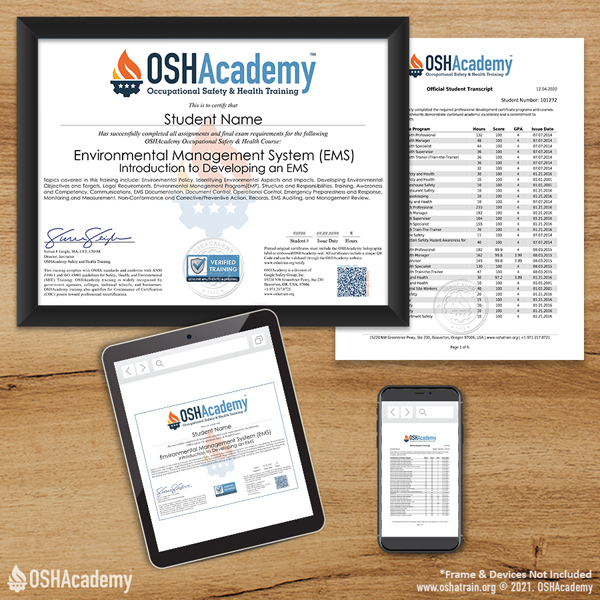
PDF + Mailed Certificate
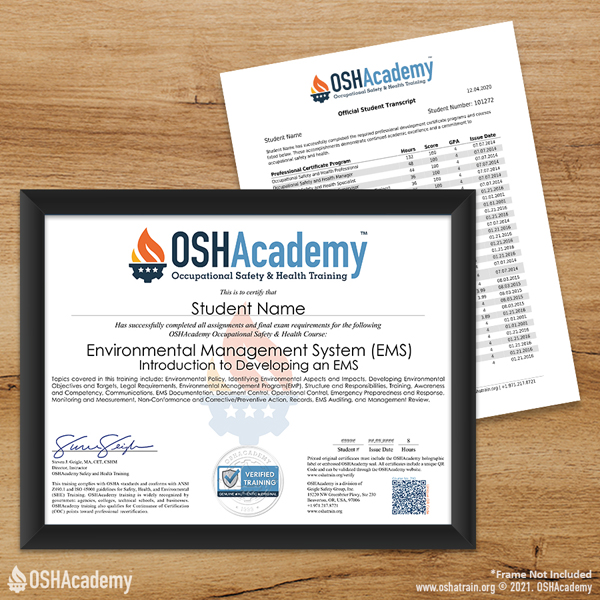
Mailed Certificate
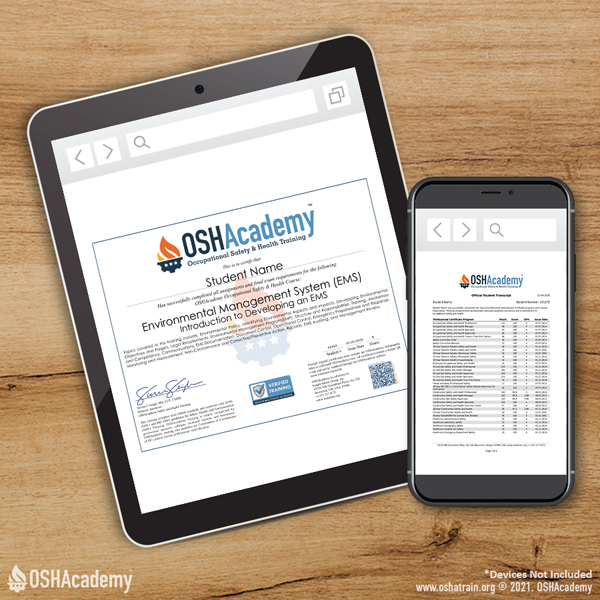
PDF Certificate
An Environmental Management System (EMS) is a set of processes and practices that enable an organization to reduce its environmental impacts and increase its operating efficiency. This course provides an overview of the EMS requirements and guidelines in International Organization for Standardization (ISO) 14001 , Environmental Protection Agency (EPA) guidelines, and other regulations. The EPA program can support environmental improvements at businesses, associations, the public, and state and federal agencies that are subject to environmental regulations.
Note: The ISO 14001:2025/2026 revision is due to be published in January or March of 2026. It enhances climate action, risk management, and digital tools in environmental management. It also expands the scope of supply chain sustainability, integrates a life cycle perspective, and strengthens reporting requirements, ensuring alignment with global sustainability goals. This course will be revised to reflect the new requirements when it is published.Course Objectives
At the end of this course, you should be able to:
| ID | Objective |
|---|---|
| TO 1.0 | Achieve a minimum score of 70% on the final course assessment. |
| LO 1.1.1 | Describe the elements of an environmental management system (EMS), and the continuous improvement model. |
| LO 1.2.1 | Discuss the EMS baseline assessment, including its scope and policy statements. |
| LO 1.3.1 | Define and give examples of environmental "aspects," "impacts," "objectives," and "targets." |
| LO 1.4.1 | Describe roles, responsibilities, and authorities within EMS programs and identify with examples. |
| LO 1.5.1 | Discuss the elements that should be developed and implemented in an effective EMS. |
| LO 1.6.1 | Discuss the checking and corrective action process for program improvement. |
Key: Terminal Objective (TO), Learning Objective (LO)