
Step 10: Identify Operational Controls and Monitoring and Measurement Needs
Operational Controls
Operational controls ensure that operations and activities do not exceed specified conditions or performance standards, or violate applicable regulations such as discharge limitations.
The need for operational controls is based on the significant aspects and legal requirements identified earlier. Operational controls are used to support the EMS and can be:
- Physical controls, (for example, berms, walls, and roofs),
- Engineering controls (for example, alarms, level indicators, and gauges), or
- Administrative controls (for example, procedures and inspections).
Operational Controls
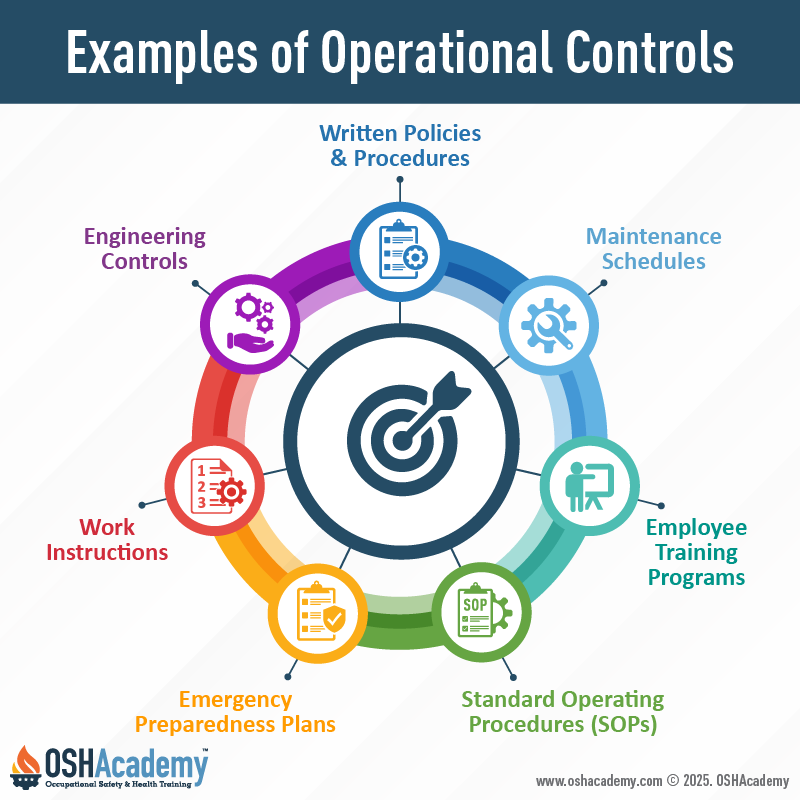
Operational controls are processes, procedures, and systems designed (administrative and engineering controls) to manage activities that could impact the environment. These controls address the significant environmental aspects identified in earlier EMS steps (e.g., Step 4: Identify Environmental Aspects and Impacts) and ensure operations minimize harm while supporting the organization’s environmental goals.
Operational controls vary based on the organization’s activities and environmental aspects. Examples include:
- Written Policies and Procedures: Formal documents outlining environmentally responsible task execution. For example, a manufacturing facility might have a policy for hazardous waste disposal to prevent contamination.
- Standard Operating Procedures (SOPs): Detailed instructions for employees. An SOP for machinery operation might include steps to reduce fuel consumption and emissions.
- Employee Training Programs: Training to ensure workers understand environmental policies and their roles. Staff handling chemicals might be trained on spill prevention.
- Maintenance Schedules: Regular equipment maintenance to prevent incidents like leaks or inefficient energy use.
- Engineering Controls: Physical measures, such as pollution control devices (e.g., air filters or wastewater treatment systems).
- Work Instructions: Specific guidelines for tasks like recycling or waste segregation.
- Emergency Preparedness Plans: Plans to address incidents like chemical spills or fires that could harm the environment.
Tailoring Controls to Environmental Aspects
Controls should be prioritized based on the significance of environmental aspects, determined through risk assessments. Activities with high potential for environmental harm or regulatory non-compliance require stricter controls. For example:
- A factory with significant air emissions might install scrubbers and maintain them regularly.
- A construction company might use silt fences to prevent runoff into waterways.
- An office with high energy use might implement automated lighting systems.
Controls must be practical, enforceable, and integrated into daily operations. They should be clearly documented and communicated through training, signage, or updates to ensure consistent application. Further details on implementation are provided in Step 16: Implementation and Operation.
For aspects that need to be controlled, review whether existing physical controls, engineering controls, and administrative controls are sufficient. If they are not, develop an operational control. Here are a couple of examples:
- You may have operational controls for production lines regarding chemical use, production methods, and temperature control to support both high quality production and EMS objectives and targets.
- You may have an Operational Control Procedure that describes how a wastewater treatment plant will be operated to ensure compliance with Clean Water Act permit requirements regarding discharges to surface water from our facility.
These operational controls help ensure that specified conditions and performance standards are met.
One of the goals should be to keep operational control procedures simple, focusing on the "who, what, where, when, how, and why" of getting the job done to meet both facility production and EMS requirements.
Examples of activities that may require operational controls include:
- chemical purchasing
- material handling
- maintenance
- plating line operations
- wastewater treatment system operation
- waste accumulation and disposal
- storage of parts before off-site shipment
Knowledge Check Choose the best answer for the question.
3-8. Which of the following is an example of an administrative control used in EMS?
You forgot to answer the question!