
Running Casing Into the Hole
During casing operations, individual joints or stands of casing are lifted, positioned, and run into the wellbore to a predetermined depth according to the well design. Because casing is heavier, larger in diameter, and less flexible than drill pipe, these operations require specialized equipment, careful sequencing, and close coordination between the drilling crew and casing crew.
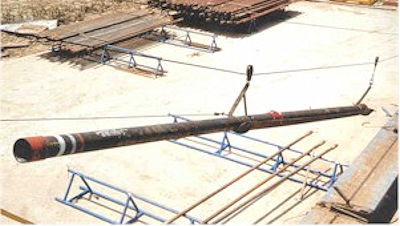
Running casing involves repetitive lifting, stabbing, making up connections, and lowering the string into the hole. These activities expose workers to many of the same hazards encountered during drilling ahead and tripping operations, often with increased risk due to the size and weight of the casing.
Potential Hazards
- Hazards similar to those encountered during drilling ahead or tripping operations, including struck-by, caught-in/between, and fall hazards.
- Getting caught between, struck by, or pinched by power tongs, casing, elevators, or other casing-handling equipment.
- Being struck by or caught between tubulars and other objects during movement, such as when casing is tailed into the rig floor through the V-door.
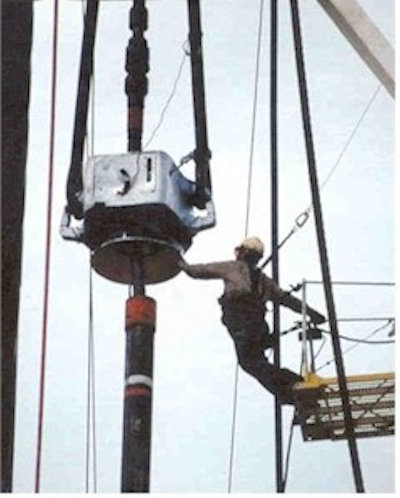
- Falling from the stabbing board, work platform, or rig floor while guiding casing into position.
- Being struck by dropped tools, equipment, or materials from elevated work areas.
Possible Solutions
- Include both the casing crew and drilling crew in the Job Safety Analysis (JSA) and pre-job safety meeting to coordinate responsibilities, communication, and sequencing of casing operations.
- Stand clear of suspended, hoisted, or moving loads at all times, and remain alert to tubulars or equipment being lifted through the V-door.
- Emphasize standard safety practices, including proper PPE use, fall protection, correct hand and foot placement, and constant communication between crew members.
- Implement a comprehensive fall protection program for the casing stabber, including 100% tie-off and approved anchorage points.
- Identify and maintain adequate clearance between the stabbing board and casing elevators to reduce pinch and crush hazards.
- Secure all tools and equipment used by the casing stabber with safety lines or tethers to prevent dropped objects.
Knowledge Check Choose the best answer for the question.
7-3. What is a possible hazard while running casing into the borehole?
You forgot to answer the question!