
Raising the Kelly and New Joint
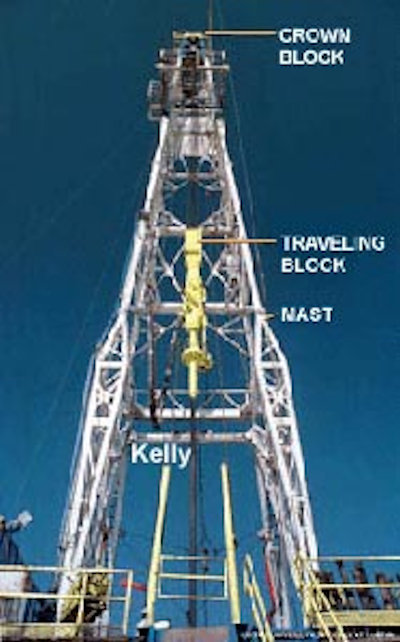
During this operation, the driller uses the drawworks to raise the kelly and the newly attached joint of drill pipe out of the mousehole and into a vertical position above the rig floor. This movement transitions the pipe from the staging area into the active drilling position.
Raising the kelly and pipe requires precise control of the drawworks and clear communication between the driller and the floor crew to prevent sudden movement, swinging, or contact with the derrick structure.
Raising the Kelly
Potential Hazards
- Being struck by debris or overhead objects if the traveling block contacts the crown block (crown-out) or if the traveling block or swivel strikes the derrick structure.
- Being struck by the kelly or drill pipe due to swinging, sudden movement, or loss of control during hoisting.
- Dropped objects from elevated equipment or unsecured tools during hoisting operations.
Possible Solutions
- Install and maintain a crown safety device on the drawworks and verify its proper operation before hoisting.
- Keep all personnel clear of the potential swing path and fall zone of the kelly and drill pipe during lifting operations.
- Maintain clear communication between the driller and floor crew using standard hand signals or radio communication.
- Remain aware of overhead hazards at all times—look up before and during hoisting operations.
- Conduct regular inspections of hoisting equipment, blocks, lines, and connections.
Knowledge Check Choose the best answer for the question.
5-5. What is the hazard if the traveling block contacts the crown block or if the traveling block or swivel strikes the derrick?
You forgot to answer the question!