
Ensuring Adequate Rest Breaks
Rest Break Schedule
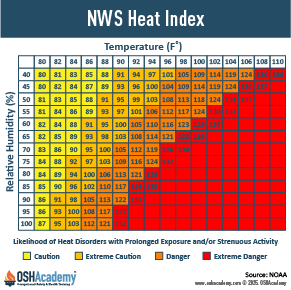
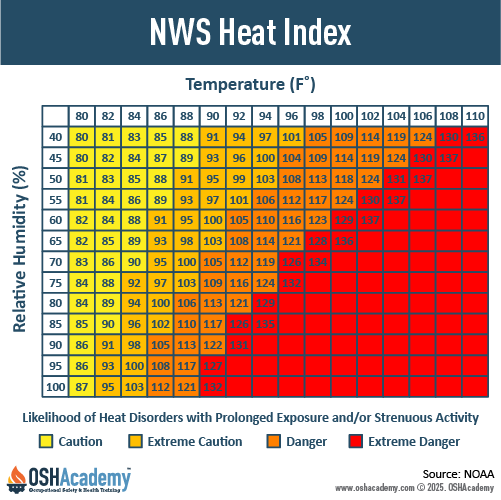
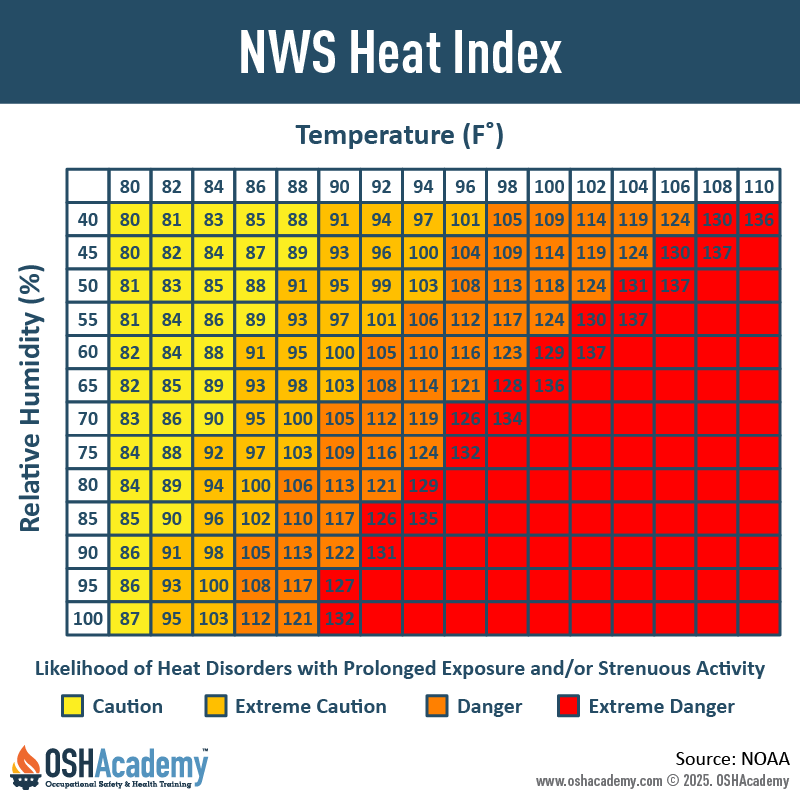
You may have heard people say, "It's not the heat, it's the humidity," but really both matter. The adjusted heat index (sometimes called the "feels-like" temperature) shows how hot it feels when you combine air temperature and humidity. This affects our comfort because when our body gets too hot, we sweat to cool off. If the air is very humid, sweat can't evaporate easily, so we stay hotter. But in dry air, sweat evaporates faster, and we feel cooler. In other words, high humidity makes it feel hotter, and low humidity makes it feel cooler. As both temperature and humidity go up, the heat index goes up too. Most weather apps on your smart phone have a "feels-like" temperature setting you can refer to.
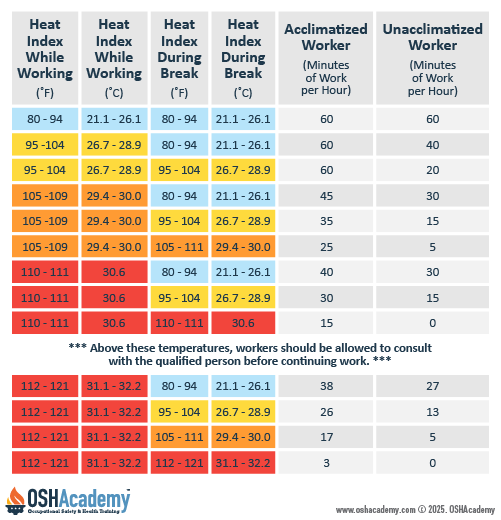
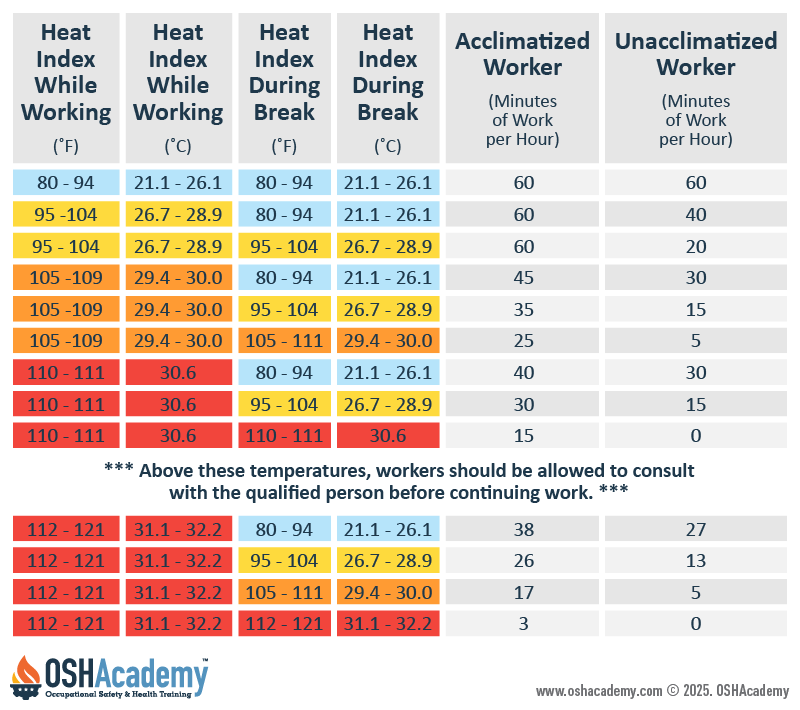
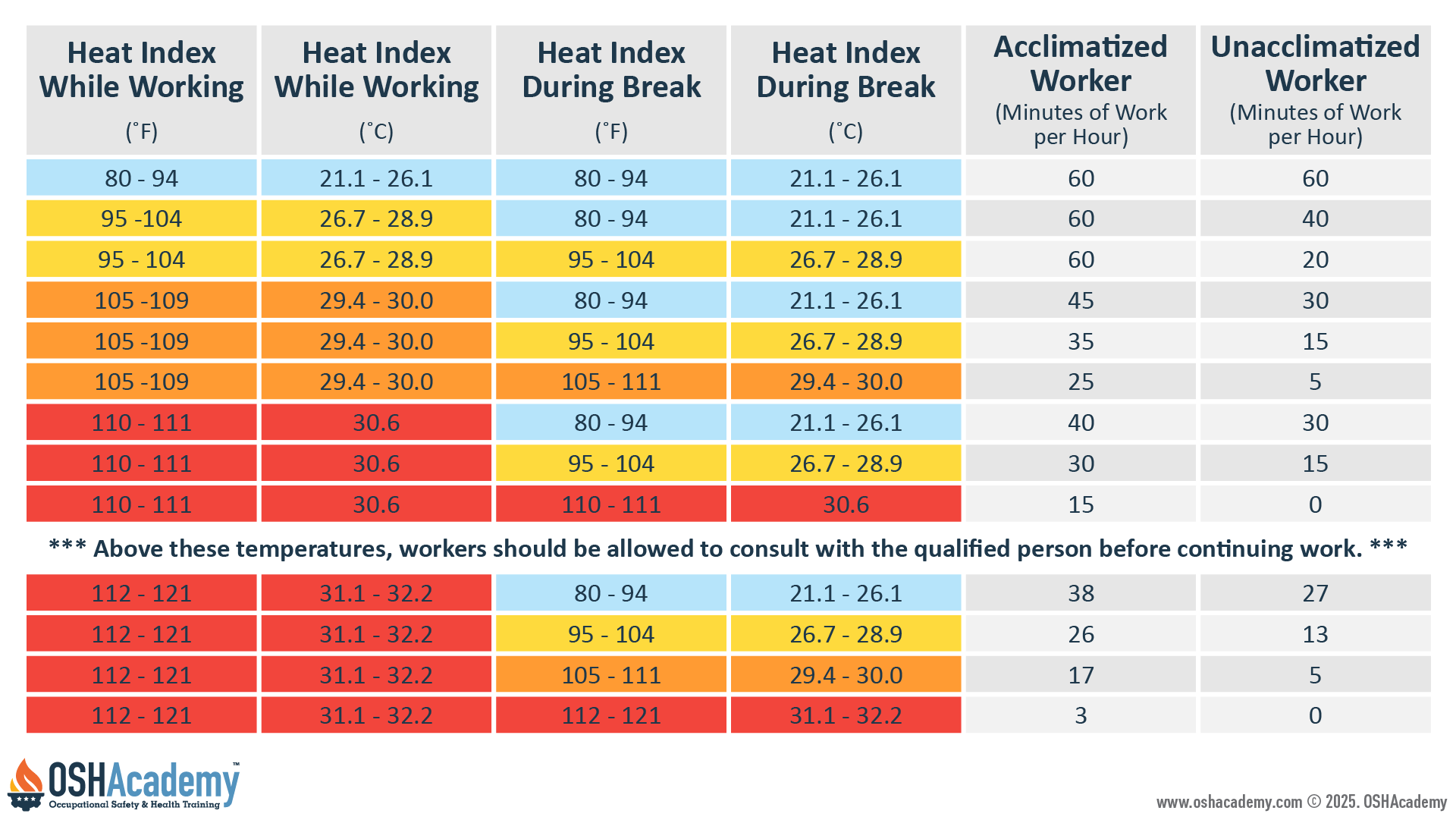
The table below provides a simplified break schedule for workers that are acclimatized and unacclimatized to working in hot conditions (see ANSI A10.50-2024 Appendix 4). The chart identifies how many minutes per hour workers should work at specific temperatures using the adjusted heat index.
Knowledge Check Choose the best answer for the question.
3-2. Why might a worker feel cooler in dry heat compared to humid heat, even if temperatures are the same?
You forgot to answer the question!