
Understanding Heat-Related Illnesses
Heat Stress Hazards
Definition and Causes of Heat Stress
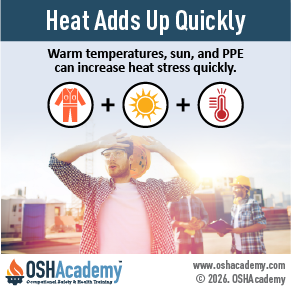
Heat stress occurs when the body cannot cool itself down enough to maintain a healthy temperature. This can lead to heat-related illnesses such as heat cramps, heat exhaustion, or even heat stroke, which can be life-threatening.
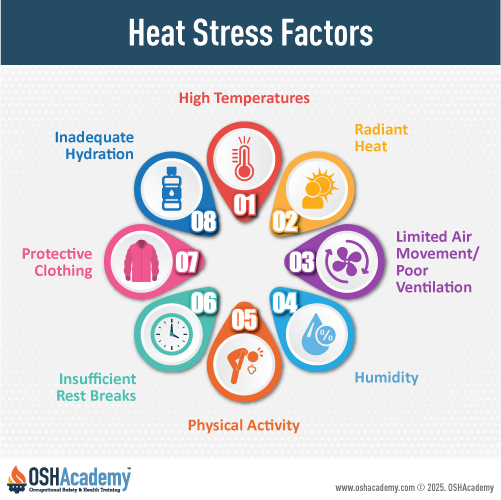
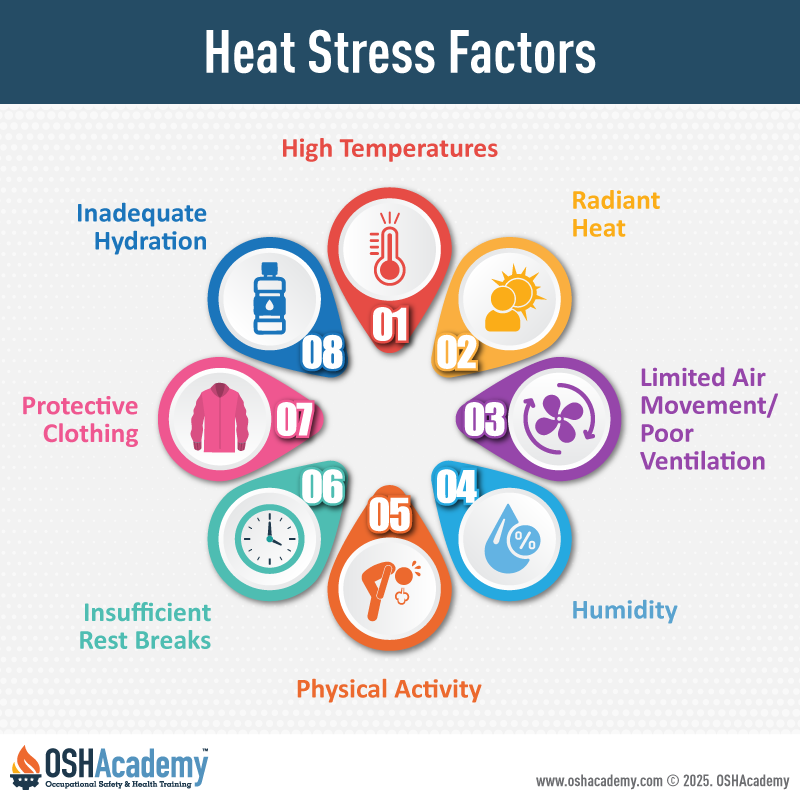
Heat stress is caused by a combination of several factors:
- High Ambient Air Temperatures: Exposure to hot weather or working in hot environments can raise body temperature.
- Direct or Radiant Heat: Sunlight and heat radiating from hot asphalt, machinery, mechanical rooms, space heaters, steam piping, and other hot surfaces.
- Limited Air Movement / Poor Ventilation: Still air reduces convective cooling.
- Humidity: High humidity makes it harder for sweat to evaporate, which is the body's natural cooling mechanism.
- Physical Activity: Engaging in strenuous physical work or exercise increases body temperature.
- Insufficient Rest Breaks: Long work periods without recovery time makes it difficult for the body to cool down.
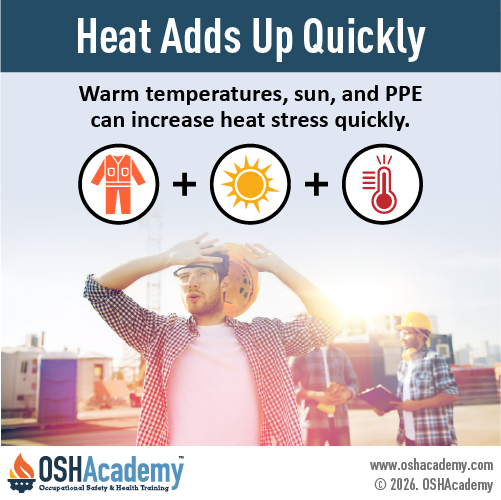
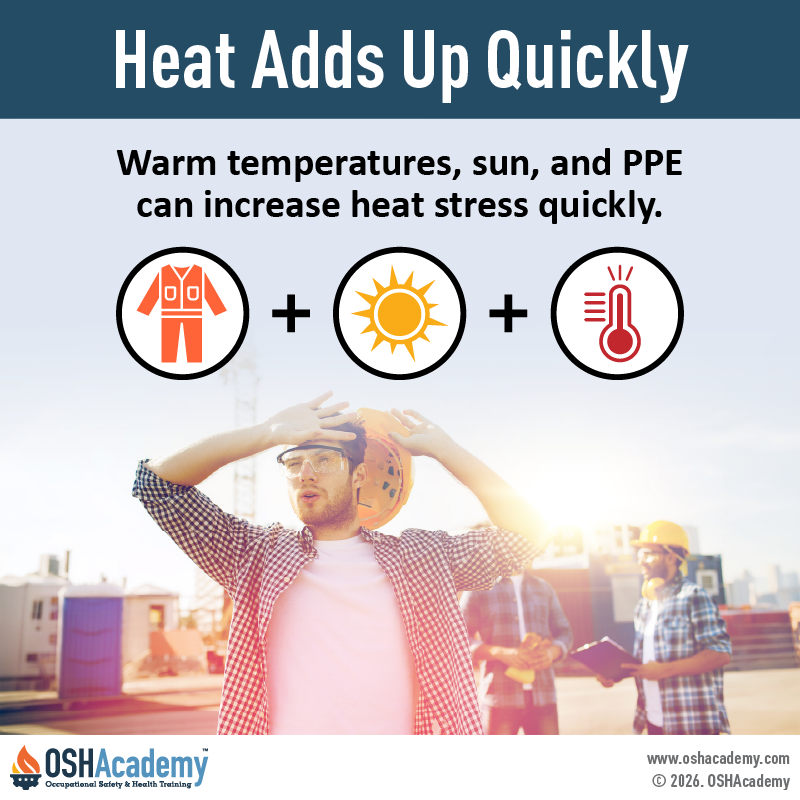
- Protective Clothing & PPE: Wearing heavy or non-breathable clothing can trap heat and prevent the body from cooling down.
- Inadequate Hydration: Not drinking enough water to replace fluids lost through sweating increases heat stress.
Understanding these factors and taking steps to address them can help you avoid heat-related illnesses. This includes staying hydrated, wearing the right clothing for hot conditions, and taking breaks in shaded or cooler areas. By following these practices, you can reduce your risk of heat stress and stay safe on the job.
Knowledge Check Choose the best answer for the question.
2-1. What is heat stress?
You forgot to answer the question!