
Risk Factors for Heat-Related Illness
Environmental Factors
Environmental factors contribute significantly to the risk of heat-related illnesses.


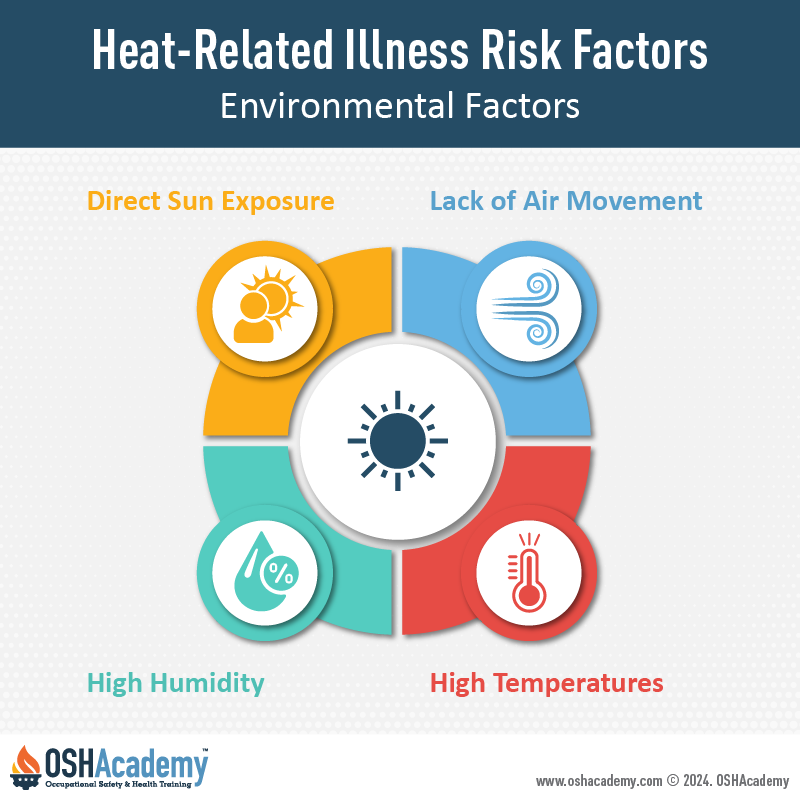
These include:
- High Temperatures: Extremely hot weather increases the risk of heat stress by raising body temperature.
- High Humidity: Humid conditions make it harder for sweat to evaporate, reducing the body’s ability to cool down effectively.
- Direct Sun Exposure: Working under direct sunlight increases the body's heat load, making it harder to maintain a safe temperature.
- Lack of Air Movement: Stagnant air prevents sweat from evaporating efficiently, leading to higher body temperatures and increased risk of heat stress.
To reduce the risks of heat-related illnesses, it's important to seek shade, use fans to improve airflow, and take regular breaks in cooler areas.
Knowledge Check Choose the best answer for the question.
2-6. How does high humidity contribute to heat-related illnesses?
You forgot to answer the question!