
Setting up the Substructure
During this phase of rig-up, major rig components are unloaded and positioned at or near their exact operating locations. The substructure serves as the foundation for the rig floor and supports the weight of the mast or derrick, drilling equipment, and associated loads during operations. Accurate placement and assembly are critical to maintaining rig stability and safe operations.
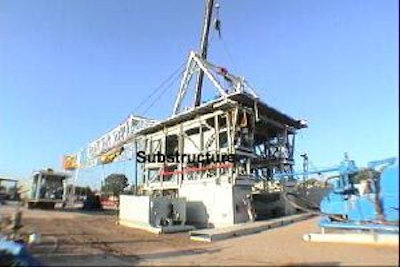
The substructure is assembled by aligning individual sections, pinning or bolting them together, and leveling the structure to ensure it can safely support the rig floor and mast. Proper leveling is essential to prevent uneven loading, equipment stress, and instability during drilling operations.
Equipping the cellar often begins during this stage but may continue throughout the rig-up process. Cellar work typically includes welding a drilling nipple to the conductor pipe, installing flow lines, and preparing connections for the blowout preventer (BOP) and other well control equipment. These tasks introduce additional hazards due to hot work and confined or restricted spaces.
Potential Hazards
- Being struck by cranes, suspended loads, trucks, or forklifts, including the risk of equipment tipping or load shift.
- Pinch-point and crush hazards to fingers and hands while aligning, pinning, or bolting substructure components.
- Burns from cutting, grinding, or welding activities associated with installing the drilling nipple or flow lines.
- Temporary or permanent eye injury from exposure to welding arcs or cutting torches.
- Falls from elevated work surfaces, including the substructure or cellar edges.
Possible Solutions
- Instruct all workers in site-specific safety procedures and ensure they understand job hazards through pre-job safety meetings, Job Safety Analyses (JSAs), or toolbox talks.
- Require workers to stand clear of suspended loads and keep hands, fingers, and other body parts away from pinch points.
- Wear proper long-sleeve, flame-resistant clothing to protect against burns from hot work activities.
- Use appropriate welding eye and face protection, including welding helmets, face shields, and safety glasses.
- Avoid looking directly at welding flames or arcs, and ensure nearby workers are shielded from arc flash exposure.
- Use approved fall protection systems when working at heights, including guardrails, harnesses, and secure anchorage points.
Knowledge Check Choose the best answer for the question.
2-3. Where should equipment be unloaded and positioned when setting up the site substructure?
You forgot to answer the question!