
Swabbing Operations
To reduce the risk of injury, equipment failure, or fire, workers must follow strict safety procedures. The following practices help protect personnel and ensure safe swabbing operations.
Possible Solutions
- Use appropriate equipment, rated for the expected pressures, to shut in the well.
- Inspect lubricators, swages, and unions for defects such as cuts, corrosion, and thread damage before use.
- Adjust oil savers by remote control with a hydraulic pump placed safely away from the wellhead.
- Train all personnel in emergency evacuation procedures.
- Place fire extinguishers in accessible positions.
- Move sources of potential ignition (such as, open fires for melting of babbitt) to designated areas at a safe distance from the wellhead or flammable liquid storage areas such as the swab tank before swabbing.
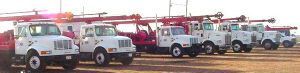
Swabbing Rigs
- Make provisions to contain spilled flammable liquids.
- Monitor the oil saver for wear and potential leakage.
- Remove all spillage of flammable liquids from equipment, cellars, rig floor, and ground area adjacent to the wellhead.
- Wear proper PPE, including respiratory protection, as required.
- Avoid approaching, walking over or standing near pressurized lines.
- Securely anchor pressurized lines to prevent whipping or bouncing caused by pressure surges.
- Use proper equipment inspection techniques to include hammer unions.
- Close the shut-off valve and bleed the pressure from the lubricator before removing it.
- Use a lubricator that will allow removal of the swab or other tools with the well shut in (valve closed).
- Use a dolly or other method to minimize manual handling of the equipment.
- Use a winch line, where available, not the swab line, to handle the lubricator.
Knowledge Check Choose the best answer for the question.
6-7. During swabbing operations, what should the worker do before removing a lubricator?
You forgot to answer the question!