
Pumping
The pumping process is an important part of well completion and stimulation. It may involve injecting various fluids into the wellbore and into the formation to improve the flow of oil or gas. These fluids can include acids, energized fluids such as nitrogen or carbon dioxide, and other specialty chemicals designed to clean, dissolve, or break down formation blockages.
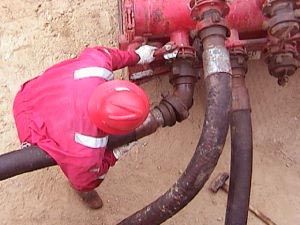
Acid pumping, also known as acidizing, is used to dissolve minerals and clear damage from the rock near the wellbore. This increases the permeability of the formation and helps oil or gas flow more easily into the well. Energized fluids help carry treatment chemicals deeper into the formation and can improve fluid recovery after the job is done. Other chemicals may be used to reduce friction, control scale, prevent corrosion, or break down thick drilling muds.
All pumping operations must be carefully planned and monitored. Workers must follow proper safety procedures when handling and injecting these fluids, as many of them can be hazardous to health or the environment if not properly managed.
Potential Hazards
- Being struck by high-pressure lines or unexpected release of pressure (for example, mismatched or excessively worn hammer unions line failure)
- Being exposed to chemical hazards (such as, silica, toxics, and asphyxiants)
- Being exposed to high noise levels
- Slips, trips, and falls
- Overexerting or receiving sprains and strains while handling materials (such as sacks and buckets)
- Being exposed to temperature extremes
- Being exposed to radiation associated with radioactive tracer materials
Possible Solutions
- Require all non-essential personnel to stand clear.
- Direct equipment operators to stay by their controls.
- Conduct adequate pressure tests on pump(s) and lines and ensure proper valve alignment before pumping. Install a check valve as close to the well head as possible.
- Hobble high pressure lines properly.
- Use proper equipment inspection techniques to include hammer.
- Wear proper personal protective equipment (such as respiratory, skin, and hearing) as appropriate for the hazards present.
- Conduct a pre-job inspection to identify, then eliminate or correct hazardous work surfaces.
- Use mechanical lifting aids, proper lifting techniques, and team lifting where appropriate.
- Keep non-essential personnel away from marked-off areas where radiation hazards may be present.
- Allow only authorized and qualified company personnel to handle radioactive tracer materials or radioactive densiometers.
- Prevent contamination and exercise proper personal hygiene when working around radioactive materials.
Knowledge Check Choose the best answer for the question.
6-3. Who are the only personnel allowed to handle radioactive tracer materials or radioactive densiometers?
You forgot to answer the question!