
Well Site Completion Safety
Well site completion is a critical phase in oil and gas production. After drilling reaches the planned depth, several steps must be taken before the well can begin producing oil or gas.
Well Completion Steps
Completing a well involves several important steps that prepare it for safe and efficient production. These include:
- Conducting a drill stem test: This test checks if oil or gas can flow to the surface from the formation.
- Setting production casing: A steel pipe is placed into the well and cemented to protect the wellbore and separate production zones.
- Installing production tubing: Tubing allows oil and gas to move up to the surface equipment.
- Starting production flow: Once the well is opened, the flow of oil or gas to the surface begins through the Christmas Tree.
- Hydraulic fracturing: A process where fluid is pumped at high pressure to break the rock and improve flow of oil or gas into the well.
- Installing beam pumping units: These units help lift fluids to the surface when natural pressure is not enough.
Once this is done, the drilling rig is dismantled and moved to the next location.
The Servicing Rig
After the casing is set and cemented, a servicing rig—also called a workover rig—is brought in.
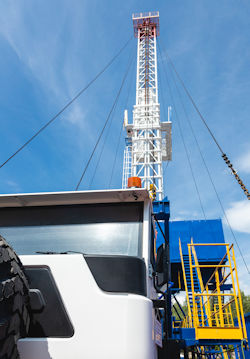
This smaller rig is used to finish preparing the well for production. It is responsible for perforating the casing at the correct depth, which allows oil or gas to flow into the wellbore from the reservoir. After perforation, production tubing is run down into the well. This tubing provides a path for the fluids to reach the surface.
At this stage, tests are run to examine the formation and see if it can produce oil or gas. This includes checking for pressure, flow rate, and the presence of hydrocarbons. If the formation is promising, the well will move to the next phase of completion. If the formation is not suitable, the well must be safely plugged and abandoned following regulations.
If the well does not need additional preparation, such as fracturing or stimulation, then the next step is to install the Christmas Tree at the surface. This marks the beginning of production operations.
The Christmas Tree
The Christmas Tree is an assembly of equipment installed on top of a completed oil or gas well. It includes valves, pressure gauges, chokes, and other components that control and regulate the flow of oil and gas from the well. The purpose of the Christmas tree is to safely control, regulate, and monitor the flow of oil or gas from a completed well while maintaining well pressure and directing production to surface facilities.
The Christmas Tree
A Christmas tree is typically installed when the reservoir has sufficient natural pressure to bring oil or gas to the surface without the use of pumping equipment. As reservoir pressure declines over time, artificial lift systems, such as beam pumping units, electric submersible pumps (ESPs), or gas lift systems, may be installed to maintain production.
During the life of the well, periodic maintenance or repairs may be required to restore production, replace equipment, or perform other well servicing operations. Depending on the work being performed, these activities may be completed using a service rig, coiled tubing unit, wireline unit, or other specialized equipment.
If testing or production results show that the formation cannot produce oil or gas in commercially viable quantities, or when the well reaches the end of its productive life, the well is plugged and abandoned (P&A). Plugging and abandonment involves placing cement plugs within the wellbore, removing or securing surface equipment as required, and restoring the site in accordance with regulatory and environmental requirements to protect groundwater, public safety, and the environment.
Knowledge Check Choose the best answer for the question.
1-1. What is the purpose of the "Christmas Tree"?
You forgot to answer the question!