
Perforating
Perforating is the process of creating holes in the well casing to allow oil or gas to flow into the wellbore. This is done using specially designed explosive charges loaded into a perforation gun.
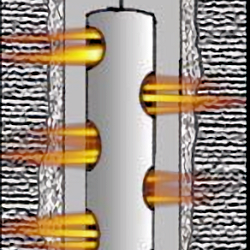
Charges perforating the casing.
Because explosives are involved, detailed procedures and trained personnel are required to carry out the job safely. Explosives must be handled with extreme care to prevent accidental detonation, injury, or damage to equipment.
The list below illustrates potential hazards and ways to reduce risks during perforating operations.
Potential Hazards
- Surface detonation of explosives: Accidental detonation at the surface can cause serious injury or death and damage to nearby equipment.
Possible Solutions
- Keep all non-essential personnel out of the immediate work area during perforating activities.
- Post visible warning signs and enforce a strict no-radio, no-phone, and no-navigation system policy to prevent accidental ignition.
- Shut down all non-essential electrical systems when arming perforating guns to reduce the chance of an electrical spark.
- Make sure all perforating operations are carried out under the direct supervision of a qualified special services supervisor.
- Report any suspected leftover explosive materials immediately to the special services supervisor. Do not attempt to handle them without proper training and authorization.
Knowledge Check Choose the best answer for the question.
5-5. What is the primary hazard while conducting perforation operations?
You forgot to answer the question!