
Grading and Finishing Equipment
Grading and finishing equipment is used to shape and smooth the surface of the ground before final construction takes place.
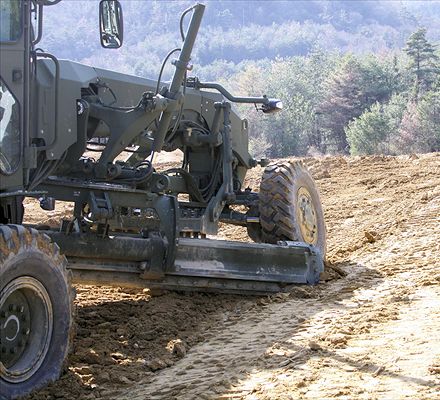
This equipment prepares the land by leveling it and adjusting slopes to meet design specifications for drainage, safety, and long-term durability of roads and other structures.
Graders are specialized machines equipped with a long, adjustable blade. This blade is used to create a flat and even surface during the grading process. They are essential in road construction and maintenance projects where precision shaping is required. They can be used for a variety of tasks that go beyond simply leveling the ground. Graders can work on both rough grading and fine finishing to prepare surfaces for road construction and other activities.
Types of Graders
- Rigid Frame Motor Grader: A grader with a fixed, non-pivoting frame that is best for straight-line grading on open, flat surfaces.
- Articulated Frame Motor Grader: A grader with a hinged frame that allows better steering and control, ideal for curved roads and tight areas.
- Small Grader: A compact grader with lower horsepower and a shorter blade, used for light-duty work like landscaping and residential grading.
- Medium Grader: A mid-sized grader that balances power and flexibility, commonly used in road construction and maintenance projects.
- Large Grader: A high-power grader with a wide blade, used for heavy-duty tasks such as highway construction and mining operations.
- Special-Purpose Grader: A grader designed for specific conditions, including models with tracks, all-wheel drive, or snow removal attachments.
Common Uses of Graders
- Finishing: Final smoothing of the surface before paving or landscaping.
- Shaping: Adjusting the contour of the ground to meet design needs.
- Bank Sloping: Cutting slopes on the sides of roads or embankments.
- Ditching: Forming drainage ditches along roadsides or fields.
- Mixing: Blending soil, aggregate, or other materials evenly.
- Spreading: Evenly distributing material over a work area.
- Side Casting: Moving excess material to the side of the blade’s path.
- Leveling and Crowning: Creating a slight slope in the road surface to allow water runoff.
- Site Stripping Operations: Removing the top layer of soil or vegetation before construction begins.
- Earth Road Maintenance: Re-grading dirt or gravel roads to maintain a smooth and safe surface.
Knowledge Check Choose the best answer for the question.
1-6. What are graders used for?
You forgot to answer the question!