
Lifting Equipment
Cranes are used for raising, shifting, and lowering heavy loads by using a projecting swinging arm or a hoisting system supported on an overhead track.
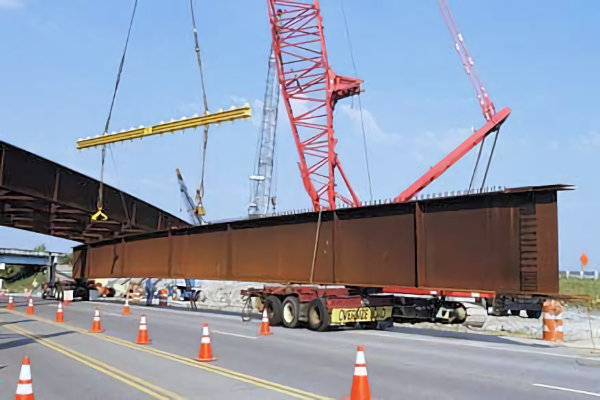
They are essential in construction, manufacturing, shipping, and many industrial environments where manual lifting is not possible or safe.
Cranes must be selected based on the weight, size, and type of load to be lifted. Using a crane beyond its rated capacity can result in equipment failure, falling loads, and serious hazards to both the operator and nearby workers.
Note: For more detailed requirements on crane operation and safety, refer to the OSHA standard 1926 Subpart CC, Cranes and Derricks in Construction .
Common types of cranes include the following:
- Mobile Cranes: These cranes are mounted on wheels or tracks, allowing them to move around job sites. They are equipped with a telescoping boom and are commonly used in construction, especially when flexibility is needed.
- Tower Cranes: Tower cranes are fixed to the ground and often seen on tall building construction sites. They have a long horizontal jib for lifting and moving heavy materials at great heights and distances.
- Overhead Cranes: Also known as bridge cranes, these are used in factories and warehouses. They move along tracks mounted to the ceiling and can lift heavy objects over large indoor areas.
- Truck-Mounted Cranes: These cranes are mounted on trucks and can be driven on highways. They are used for lifting operations that require both mobility and heavy load capacity.
- Crawler Cranes: Crawler cranes are mounted on a set of tracks instead of wheels. They are very stable and can move around soft or uneven ground without needing outriggers.
- Floating Cranes: These cranes are mounted on barges and are used for lifting operations on water, such as in port construction, bridge building, and ship repairs.
For more information about crane and derrick safety see OSHAcademy Courses 820 Crane and Derrick Safety I and 821 Crane and Derrick Safety II.
Knowledge Check Choose the best answer for the question.
1-3. Which of the following is a serious hazard to consider when using a crane?
You forgot to answer the question!