
Excavation Equipment
An excavator is a power-driven machine mostly used in earthmoving operations. It uses a hydraulic system to operate a boom, stick, and bucket, allowing it to dig deep into the ground, lift heavy materials, and move debris efficiently. Excavators are essential on construction sites, especially when digging foundations, trenches, or removing large amounts of soil or rock.
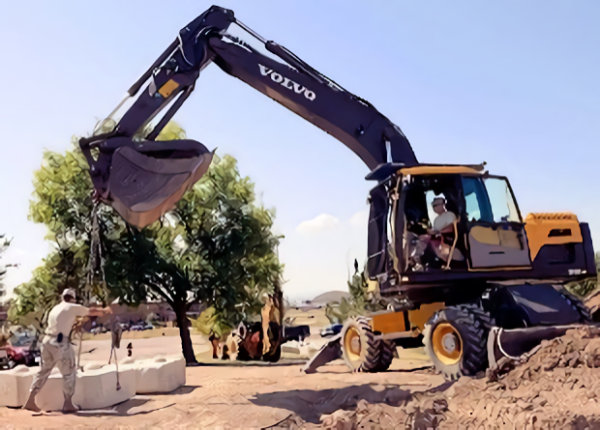
Excavators are large backhoes.
Heavy equipment typically used for excavating include the following:
- Backhoes: Backhoes are used for surface or subsurface excavation of solids and sludge. These machines dig below the surface and are commonly used for trenches, building footings, and foundations. A backhoe is connected to the loader frame with a rigid coupling, providing strength and control during digging.
- Excavators: Excavators are large backhoes designed for heavy-duty operations. They can be mounted on trucks, truck carriers, or be self-propelled with wheels. They are powered by hydraulic systems and are made of three main parts: the revolving upper unit, the travel base, and the attachment, which is usually a bucket. Excavators are used for deep digging, lifting, demolition, and material handling.
- Front-End Loaders: A front-end loader is a self-contained machine mounted on rubber tires or tracks. It is one of the most versatile pieces of equipment used in excavation and loading work. Front-end loaders can be equipped with different tools to function as a loader, bulldozer, scraper, clamshell, forklift, backhoe, crane, auger, or sweeper. They are valued for their ability to perform many tasks with a single machine.
Knowledge Check Choose the best answer for the question.
1-2. Which of the following heavy equipment is typically used for excavating?
You forgot to answer the question!