
Risk Factors for Heat-Related Illness
Environmental Factors
Environmental factors contribute significantly to the risk of heat-related illnesses.


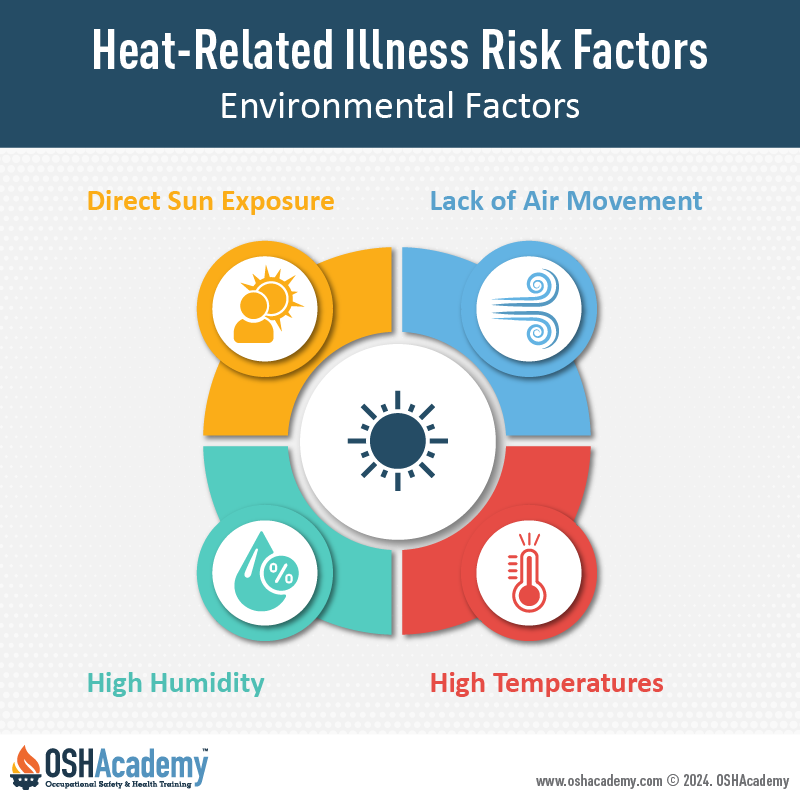
These include:
- High Temperatures: Extremely hot weather increases the risk of heat stress by raising body temperature.
- High Humidity: Humid conditions make it harder for sweat to evaporate, reducing the body’s ability to cool down effectively.
- Direct Sun Exposure: Working under direct sunlight increases the body's heat load, making it harder to maintain a safe temperature.
- Lack of Air Movement: Stagnant air prevents sweat from evaporating efficiently, leading to higher body temperatures and increased risk of heat stress.
To mitigate these risks, it is important to seek shade, use fans, and take regular breaks in cooler environments. Understanding these factors can help in planning and implementing effective heat safety measures.
Knowledge Check Choose the best answer for the question.
2-7. Why does lack of air movement increase the risk of heat stress?
You forgot to answer the question!