
Habitat Affected
Birds
Seabirds are among the most vulnerable animals affected by oil spills. Many species spend much of their lives on or near the ocean surface, where floating oil tends to collect. Birds that dive to catch fish or rest in large groups on the water are especially at risk.
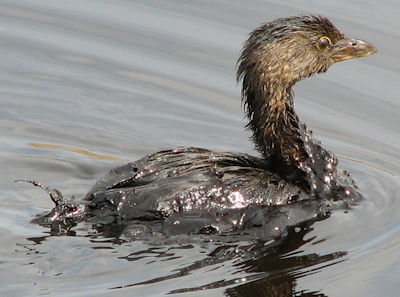
Oil can coat a bird’s feathers, destroying their waterproofing and insulation. When this happens, birds lose body heat quickly and may die from hypothermia. Soaked feathers also become heavy, making it harder or impossible for birds to fly, escape predators, or feed.
Ingesting oil is another serious danger. Birds often try to clean themselves by preening, which causes them to swallow oil. This can lead to internal injuries, organ damage, and poisoning. However, the most common causes of death after an oil spill are drowning, starvation, and exposure to cold temperatures.
In some cases, wildlife teams attempt to rescue, clean, and rehabilitate oiled birds. While this can help some individuals, the chances of survival and successful breeding after release are often low for many species. Most birds do not survive the stress and exposure involved in cleaning and recovery. However, there are exceptions—penguins, for example, tend to be more resilient. With proper care, many oiled penguins can survive the cleaning process and return to their natural breeding cycles.
Rocks
When oil washes onto the shoreline, it coats everything it touches—including rocks, boulders, and pebbles. Oil sticks to these surfaces and can be very difficult to remove, especially if it has been there for a long time or has weathered into a thicker form.
Oil-covered rocks don't just harm the environment—they also pose safety risks for workers and emergency responders. These surfaces become extremely slippery, increasing the chance of slips, trips, and falls. Workers must take extra care when walking in rocky areas near the shore and should always wear proper footwear and personal protective equipment (PPE).
Cleaning rocks can also be time-consuming and labor-intensive. In some cases, high-pressure washing systems or chemical cleaners may be used, but these methods can disturb the surrounding environment.
Knowledge Check Choose the best answer for the question.
3-5. Which of the following seabirds is most likely to survive the cleaning process and rejoin breeding?
You forgot to answer the question!