
Oil Spill Cleanup Equipment
When an oil spill happens, cleanup workers use different types of tools and equipment to remove the oil from water and shoreline areas. One of the most common methods is mechanical cleanup, which includes the use of containment booms and skimmers. These tools help collect and remove oil before it spreads further or causes more environmental damage.
Containment Booms
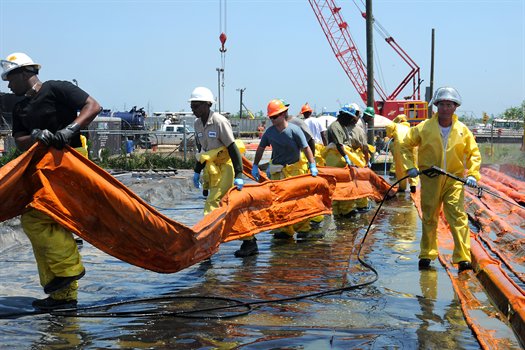
A containment boom is a long, floating barrier used to stop the spread of oil on the surface of the water. It looks like a fence or curtain that floats and hangs below the surface to keep oil from escaping underneath. Booms are one of the first tools used in an oil spill response to keep the oil from reaching shorelines or sensitive habitats.
Booms are usually made from strong, flexible materials and can be connected together to create longer barriers. They are often towed in a "U" shape by boats to gather oil into one area, making it easier to remove with skimmers or vacuums.
Containment Boom Use
- Used to contain oil slicks and help lift oil off the water’s surface.
- Helps protect shorelines, marshes, and wildlife habitats from contamination.
- Booms are reusable but must be cleaned (decontaminated) after each use to remove oil residue.
- They are heavy, bulky, and difficult to handle—especially in bad weather or rough seas.
- Deployment and recovery require trained personnel and often the use of cranes or boats.
Types of Containment Booms
Different types of booms are used depending on environmental conditions, spill size, and response strategy.
- Inflatable Booms: Filled with air for buoyancy; easy to transport but need pumps and maintenance.
- Solid Flotation Booms: Use foam or other materials to float; more durable and commonly used in rougher conditions.
- Fire Booms: Special booms used during controlled burns to contain oil while it's being burned on the water.
Fire Boom
- Sorbent Booms: These booms are made out of a material that absorbs oil. If you were to take the inside of a disposable diaper out and roll it into strips, it would act much like a sorbent boom. Sorbent booms don't have the "skirt" that hard booms have, so they can't contain oil for very long.
Challenges with Booms
- Wind, waves, and strong currents can push oil over or under the boom.
- Debris in the water can damage or clog the boom.
- Requires proper anchoring and skilled operators to stay in place effectively.
Booms are a key part of any oil spill response, but they work best when used quickly and with other cleanup tools like skimmers, sorbents, or dispersants.
Knowledge Check Choose the best answer for the question.
5-1. What is the advantage of using an oil containment boom during cleanup operations?
You forgot to answer the question!