
Static Hanging Lines
Wire Rope or Cable Clips
Wire rope clips, also known as cable clamps, are used to secure the end of a wire rope when forming a loop or attaching it to another fitting. It is important to make sure the correct number and size of clips are used, based on the diameter of the wire rope and according to the manufacturer’s recommendations. Using the wrong size or too few clips can result in a weak connection that could fail under load.
Check that the clips are installed correctly, following proper rigging practices. The saddle of the clip must be placed on the live end of the cable, and the U-bolt on the tail end. This prevents damage to the load-bearing portion of the rope. Also, ensure the cable tail does not stick out in a way that could become a snag hazard or interfere with nearby equipment, tools, or moving parts.
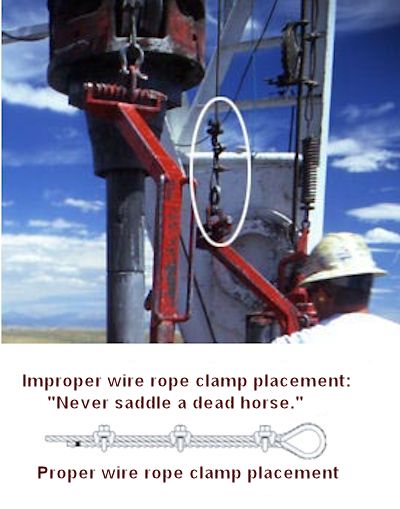
Installation
Each wire rope clip must be inspected for cracks, deformities, stripped threads, and signs of wear that could reduce its strength. Make sure nuts are tight and show no signs of loosening. If any clip is damaged or installed incorrectly, it must be replaced or reinstalled before the cable is used.
When static lines are hung over work areas, the shackles used must be the 4-part type with a bolt and locking pin. This type of shackle prevents accidental opening or loosening during operations. Screw pin shackles are not allowed for overhead static lines, as they can unscrew under vibration or movement, increasing the risk of dropped loads or falling equipment.
Knowledge Check Choose the best answer for the question.
6-5. What type of shackles should be used to hang static lines over work areas?
You forgot to answer the question!