
Hoses, Pins, and Keepers
Hose and Fittings
Hoses are used on the rig to move fluids and gases under pressure, including hydraulic fluid, fuel, water, air, and chemicals.
High Pressure Hoses
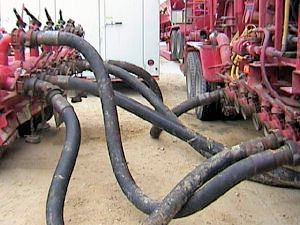
Conducting regular inspections helps ensure that hoses are in good working condition and being used within their design limits. Damaged or improperly used hoses can burst or leak, creating safety hazards such as burns, fires, chemical exposure, or slips and falls.
Hose
Every hose on the rig must be listed with a description of its location and its purpose. This information helps other crew members quickly locate and inspect the hose if needed. Include details such as the system it connects to, the type of material it carries, and its routing across the rig. Clear records make inspection and maintenance safer and more efficient.
Service Rating
Each hose must be clearly labeled with its pressure rating, temperature range, and material compatibility. This labeling ensures that the hose is used within its design limits. Some hoses are not approved for high-pressure use, high temperatures, or exposure to corrosive fluids. Using a hose outside of its rated service can result in a dangerous failure.
Hoses being used for tasks they were not designed for must be replaced or removed from service. For example, using a low-pressure air hose to transfer hydraulic fluid or connecting a water hose to a hot oil system can lead to serious equipment damage or personal injury. Always match the hose type and rating to the system and environment where it will be used.
Knowledge Check Choose the best answer for the question.
9-1. Each drilling rig hose must be clearly marked with its _____.
You forgot to answer the question!