
Respiratory Protection
Respirators are a critical part of personal protective equipment (PPE) used to protect workers from breathing in harmful dusts, fumes, or airborne particles.
NIOSH N95 Facepiece
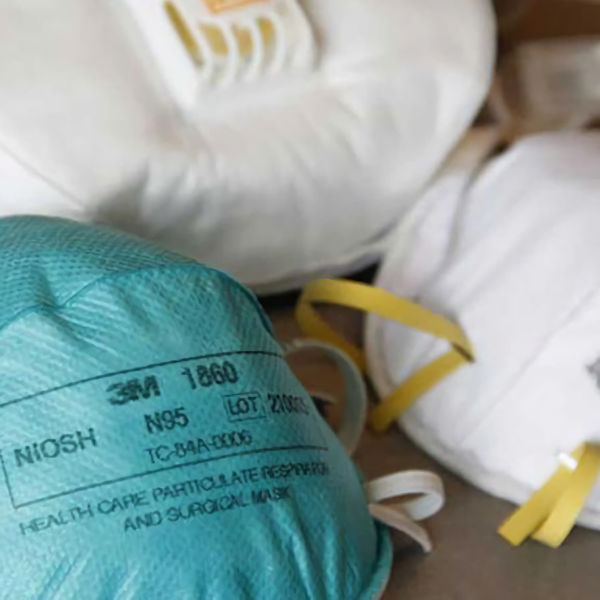
N95 respirators are the most commonly used type and are approved by the National Institute for Occupational Safety and Health (NIOSH) for filtering out at least 95% of airborne particles, including fine dusts.
N95 and Other Filter Types
N95, R95, and P95 respirators provide protection against particles that do not contain oil. The letter indicates resistance to oil-based particles: The letter indicates resistance to oil-based particles:
- N95: Not resistant to oil
- R95: Somewhat resistant to oil
- P95: Strongly resistant to oil (oil-proof)
Higher-efficiency filters, such as N100, R100, and P100, provide even more protection and may be required for high-exposure tasks.
When to Use Respirators
Use the following personal protective equipment as necessary:
- Crystalline silica-containing materials – For activities such as cutting, grinding, drilling, or demolishing concrete, brick, tile, or mortar, workers must wear respirators with at least an N95, R95, or P95 filter. For high-dust operations like sandblasting or mixing dry concrete, a higher level of respiratory protection (such as P100 or a powered air-purifying respirator) may be required.
- Nuisance dusts – For dried mud, dirt, silt, and similar low-toxicity dusts, N95, R95, or P95 respirators may be used to reduce inhalation exposure. While these dusts are not as dangerous as silica, long-term exposure can still affect respiratory health.
- Mold (non-remediation tasks) – N95, R95, or P95 respirators may be used when working in areas where mold is present but full mold remediation is not being performed.
- Odors – Some filters include a charcoal or activated carbon layer to help reduce odors from organic vapors or decaying materials. These filters do not provide protection against toxic gases but can improve comfort.
Proper Use and Fit
Respirators must be used as part of a written respiratory protection program, as required by OSHA. The program must include:
- Medical evaluation for each worker required to wear a respirator
- Fit testing to ensure the respirator forms a proper seal on the face
- Training on how to properly use, inspect, store, and maintain the respirator
- Procedures for cleaning or replacing filters as needed
Respirators must be NIOSH-approved, and workers must never alter or wear damaged respirators. Facial hair, glasses, or improper wearing can reduce the effectiveness of the seal and increase exposure risk.
Employers must evaluate the task, exposure level, and control methods before deciding on the type of respirator needed. If exposure exceeds OSHA’s permissible exposure limits (PELs) or other occupational exposure limits, more protective respirators must be used.
Respiratory Protection Checklist
Use this checklist before and operations requiring respiratory protection to ensure safe working conditions and procedures are being followed.
| Check (✓) | Safety Measure |
|---|---|
| Use N95, R95, or P95 respirators when working with silica-containing materials | |
| Use P100 or powered respirators for high-exposure tasks like sandblasting | |
| Wear N95, R95, or P95 respirators for nuisance dusts like dirt, dried mud, or silt | |
| Use respirators with charcoal filters to reduce non-toxic odors | |
| Respirators must be NIOSH-approved and properly fitted | |
| Conduct a medical evaluation before assigning respirator use | |
| Fit test respirators to ensure proper seal and protection | |
| Train workers on respirator use, inspection, and maintenance | |
| Replace filters as needed and clean reusable respirators regularly | |
| Ensure respirators are worn correctly and not altered or damaged |
Knowledge Check Choose the best answer for the question.
3-5. At a minimum, what type of filters should you use for work with crystalline silica-containing materials?
You forgot to answer the question!