
Fall-To-Below and Fall-to-Same-Surface Hazards
Fall-to-Below Hazards
Fall-to-Below Hazards occur when a worker falls from a higher level to a lower level.
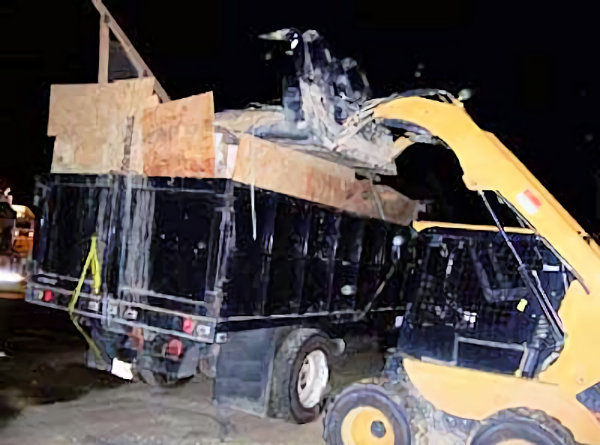
These falls can happen from equipment platforms, truck beds, or debris piles. Workers may fall while mounting or dismounting heavy equipment or while riding in unsafe locations on the machinery. Although riding on heavy equipment is not permitted, it continues to be a cause of serious accidents on construction sites.
Example: A laborer died after he fell from the top of a pile of construction debris that had been loaded into the bed of a truck to a paved driveway 8.5 feet below.
Fall-to-Same-Surface Hazards
Fall-to-same-surface hazards are common on construction sites and when working around heavy equipment. They occur when a worker slips, trips, or falls on the same level where they are walking or working. While they may not always seem serious, they can lead to broken bones, sprains, back injuries, or even fatalities—especially if the fall results in a secondary impact or contact with heavy equipment and machinery.
Common causes of same-level falls include:
- Wet, muddy, or oily walking surfaces
- Uneven ground or unmarked holes
- Loose materials or tools left on walking paths
- Improper footwear or lack of traction
- Poor lighting or visual obstructions
Preventing fall-to-same-surface incidents requires regular housekeeping, clear walkways, slip-resistant surfaces, proper footwear, and adequate lighting in all work areas.
Knowledge Check Choose the best answer for the question.
2-4. A driver slips on an oily patch and falls while walking beside heavy equipment. The safety officer must determine how to classify this incident. Which hazard category does it fall under?
You forgot to answer the question!