
Health Risks of Weathered Crude Oil
Health risks associated with working while exposed to weathered crude oil include the following:
- Potential dermatitis hazard from skin contact.
- Inhaling oil droplets/oily particles put into the air during cleanup operations can be irritating to eyes, nose, throat and lungs.
- Evaporation that occurs during the first 24 to 48 hours after the spill greatly reduces inhalation hazards from the toxic volatile components, such as benzene.
Contact Dermatitis
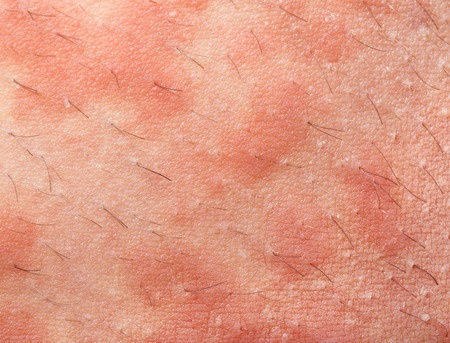
NOTE: Even if air sampling shows no detectable levels or very low levels of volatile organic compounds (VOCs), there still may be health effects present.
Tarballs and Weathering
Tarballs are the little, dark-colored pieces of oil that can sometimes stick to your feet when you go to the beach and they are actually remnants of oil spills. When crude oil (or a heavier refined product) floats on the ocean surface, its physical characteristics change.
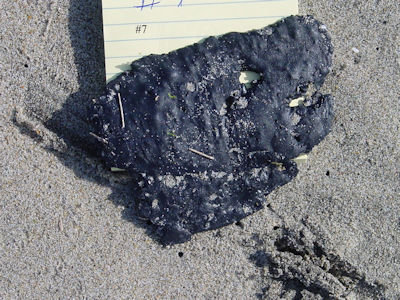
Weathering processes eventually create tarballs that are hard and crusty on the outside and soft and gooey on the inside, not unlike a toasted marshmallow.
- During the first few hours of a spill, the oil spreads into a thin slick.
- Winds and waves tear the slick into smaller patches that are scattered over a much wider area.
- Various physical, chemical, and biological processes change the appearance of the oil.
Tarballs are very persistent in the marine environment and can travel hundreds of miles. There is no magic trick to making tarballs disappear. Once tarballs hit the beaches, they may be picked up by hand or by beach-cleaning machinery. If the impact is severe, the top layer of sand containing the tarballs may be removed and replaced with clean sand.
Knowledge Check Choose the best answer for the question.
2-7. Which of the following hazards to oil spill cleanup workers is reduced after 48 hours?
You forgot to answer the question!