
What is Crude Oil?
Crude oil is a thick, dark liquid that comes from deep underground. It is made up of a wide variety of chemicals called hydrocarbons. These hydrocarbons can be light, medium, or heavy, depending on their size and weight.
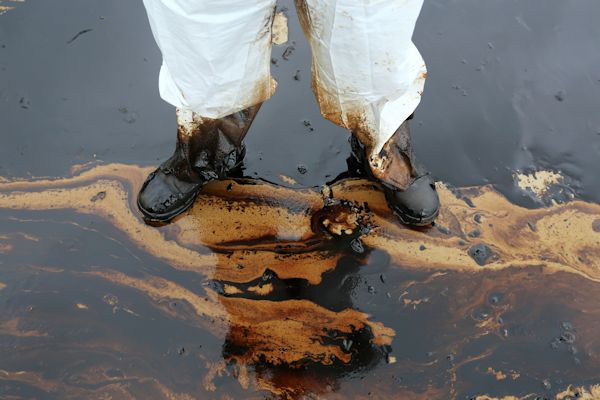
Crude oil is a mixture of hydrocarbons.
Crude oil is not just one chemical—it is a complex mixture. Some parts of it can evaporate quickly, while others are sticky and thick, staying behind and causing long-term damage to the environment. Cleanup crews must understand what they are dealing with in order to stay safe and work effectively.
- The hydrocarbons in crude oil are mostly alkanes, cycloalkanes, and aromatic hydrocarbons. It also contains small amounts of nitrogen, oxygen, and sulfur, along with trace metals such as iron, nickel, copper, and vanadium. The exact chemical makeup can vary depending on where the oil is from.
- The light parts of crude oil—such as benzene, xylene, toluene, and ethylbenzene—can evaporate into the air, usually within the first 24 hours of a spill. These chemicals often disappear before the oil reaches the shore but can pose inhalation risks for responders.
- The medium and heavy parts are thicker and more persistent, with a consistency similar to motor oil. These parts remain on land or in shallow water and are the main focus of cleanup operations.
- Crude oil contains several harmful substances, including some that are known to cause cancer. Because of this, all workers involved in oil spill response must wear proper personal protective equipment (PPE) and follow safety procedures.
Knowledge Check Choose the best answer for the question.
2-3. Which parts of the crude oil are usually the focus of cleanup operations?
You forgot to answer the question!