
Rigging Up the Service Rig
During this step, workers must take extra precautions to stay clear of any moving parts, especially lines, cables, and counterweights.
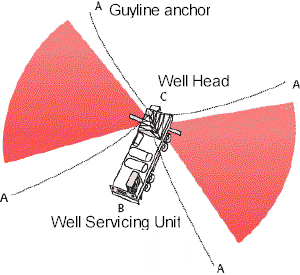
A guy line anchor (A) is a buried weight or anchor to which a guy line is attached.
The truck- or trailer-mounted rig is stabilized and leveled by manual or hydraulic jacks. All guy lines are uncoiled and laid out to remove kinks or knots.
The mast is readied for raising, then raised and guyed into place. The derrick emergency escape device is rigged up and the work platform is readied for service operations.
Possible Solutions
- Identify all electrical hazards and maintain adequate clearances.
- Take appropriate precautions to mitigate slip, trip, and fall hazards.
- Stay to the side, clear of the unit, lines, and cables while the mast is being raised, lowered, or telescoped.
- Uncoil and visually inspect all cables before starting to raise the mast.
- Inspect the well pad and set additional foundation materials as appropriate to stabilize the unit.
- Inspect all high-pressure hoses and fittings for signs of wear, damage, or leaks.
- Ensure that the unit operator assesses the wind speed and direction to determine if the mast can be raised safely.
- Allow no personnel on the unit, other than the operator working at the controls, when raising or lowering the mast. All others must stand clear.
- Inspect all anchors before rigging up the mast. Anchors must meet American Petroleum Institute (API) specifications for loads and guying patterns.
- Use proper lifting techniques when handling heavy components to avoid back injuries.
- Use proper hand and foot placement to prevent slips and falls while working on the unit.
- Control the position of the counterweight by maintaining tension on the guy wire. This keeps the counterweight safely away from the mast structure during raising.
Knowledge Check Choose the best answer for the question.
3-4. Who is allowed on the unit when raising or lowering the servicing rig mast?
You forgot to answer the question!