
Controlling Hazards
It's important that fire hazards are identified and controlled in an effective FPP.
Preventing Fires
Employees must be educated on the workplace fire hazards and the procedures to follow to prevent and control fire hazards. They must also learn how to respond to the fires those hazards might cause.
Below are examples of what employees routinely can do to prevent fires in the workplace.
- Check storage areas for flammable liquids and keep them in approved safety cabinets away from heat sources.
- Replace space heaters that don't have automatic shut-off features to reduce the risk of accidental fires.
- Remove defective power strips from use before they cause a fire.
Electrical System Failures and Misuse
Electrical system failures and the misuse of electrical equipment are leading causes of workplace fires. Fires can result from loose ground connections, wiring with frayed insulation, or overloaded fuses, circuits, motors, or outlets.
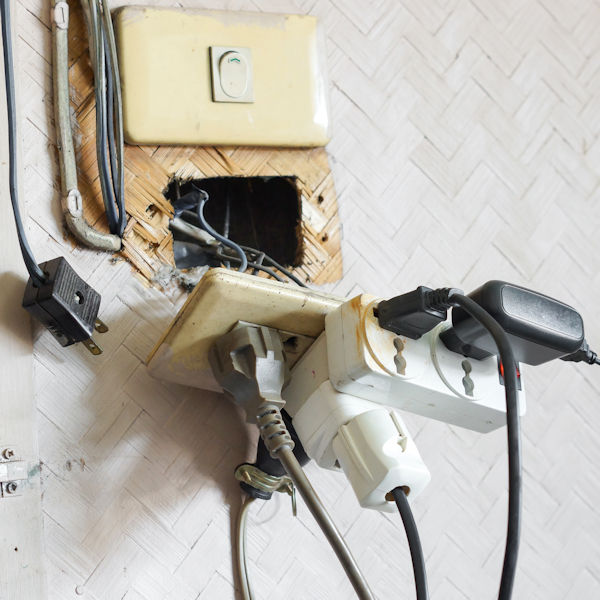
Electrical system failures and the misuse of electrical equipment are leading causes of
workplace fires.
To prevent electrical fires, employees should:
- Wiring: Replace worn or damaged wires immediately. Frayed or damaged insulation can expose live wires, increasing the risk of arcing and sparking, which can ignite nearby materials. Timely replacement ensures the integrity of the electrical system and helps prevent short circuits and fires.
- Fuses: Use only appropriately rated fuses for electrical panels. Using the wrong fuse can allow too much current to flow through a circuit, potentially overheating wires and causing fires. Properly rated fuses ensure the system is protected against overloads and short circuits.
- Extension Cords: Do not use extension cords as permanent wiring solutions. Extension cords are meant for temporary use and may not handle the electrical load over time. Permanent use can lead to overheating, especially if cords are damaged, undersized, or placed under rugs or furniture. Only use extension cords that are UL (Underwriters Laboratories) and FM (Factory Mutual) approved that meet strict safety standards. Using uncertified cords increases the risk of insulation failure, overheating, or fire due to poor manufacturing quality.
- High Hazard Areas: Inspect wiring in high-risk areas regularly, such as near flammable chemicals. High-risk areas need more frequent inspections because a small electrical spark in these areas could ignite hazardous vapors or materials, leading to a serious fire or explosion.
- Grounding: Ensure all equipment is properly grounded or double-insulated. Grounding provides a safe path for electricity to follow in case of a fault. Double insulation adds an extra layer of protection. These safety features reduce the risk of electric shock and electrical fires.
- Access: Maintain adequate space around electrical panels and equipment to allow safe maintenance access. Keeping the area around panels clear ensures safe access for inspections, repairs, and emergency shutdowns. Blocked panels delay response time and may prevent safe operation, especially in an emergency.
Knowledge Check Choose the best answer for the question.
2-1. What are the leading causes of workplace fires?
You forgot to answer the question!