
Basic Lockout/Tagout Steps
Step 6: Release of Stored Energy
Following the application of lockout/tagout devices after machine or equipment shutdown, all potentially hazardous stored energy must be completely rendered safe.
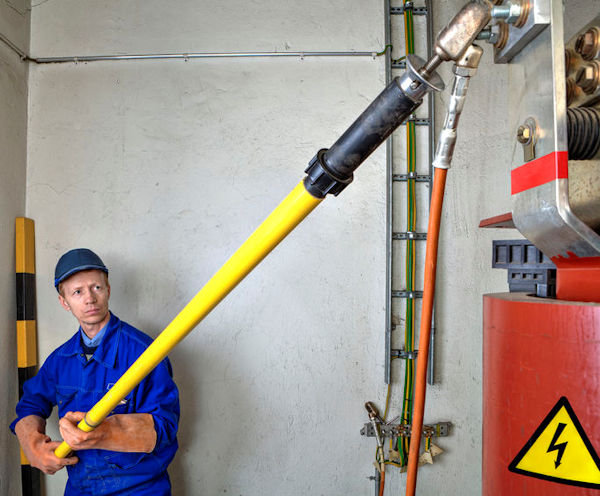
Isolating and de-energizing a transformer by grounding.
Below is a list of possible sources of stored energy.
- Capacitors
- Coiled springs
- Elevated machine members
- Rotating fly wheels
- Air, gas, steam, chemical, and water systems
If the energy could return to a hazardous level, make sure that it remains isolated from the equipment until all service work is finished. Below is a list of safe practices for dissipating potential energy.
- Vent pressurized fluids until internal pressure levels reach atmospheric levels
- Discharge capacitors by grounding them
- Release or block tensioned springs
- Ensure that all moving parts have stopped completely
Stored energy.
- 1910.147(d)(5)(i) Following the application of lockout or tagout devices to energy isolating devices, all potentially hazardous stored or residual energy shall be relieved, disconnected, restrained, and otherwise rendered safe.
- 1910.147(d)(5)(ii) If there is a possibility of reaccumulation of stored energy to a hazardous level, verification of isolation shall continue until the servicing or maintenance is completed, or until the possibility of such accumulation no longer exists.
Knowledge Check Choose the best answer for the question.
6-7. Releasing the potential energy in capacitors can be accomplished by _____.
You forgot to answer the question!