
Ground-Fault Circuit Interrupters (GFCIs)
Because insulation and grounding do not protect against every electrical fault, additional protective measures may be required. One commonly used protective device is a ground-fault circuit interrupter (GFCI).
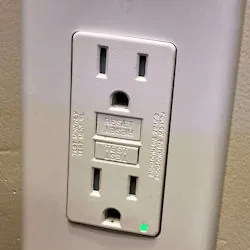
A ground-fault circuit interrupter (GFCI) is a fast-acting device designed to shut off electric power in the event of a ground fault within as little as 1/40 of a second.
It works by comparing the amount of current going to and returning from the equipment along the circuit conductors. When the amount going differs from the amount returning by approximately 5 milliamperes, the GFCI interrupts the current.
Receptacle Type
The receptacle type incorporates a GFCI device within one or more receptacle outlets. Such devices are becoming popular because of their low cost.
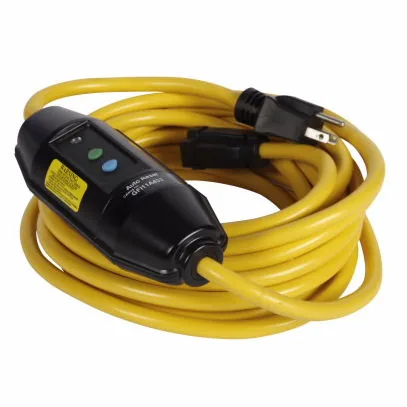
Portable Type
Portable-type GFCIs come in several styles, all designed for easy transport. Some are designed to plug into existing non-GFCI outlets, or connect with a cord and plug arrangement. The portable type also incorporates a no-voltage release device that will disconnect power to the outlets if any supply conductor is open. Units approved for outdoor use will be in enclosures suitable for the environment. If exposed to rain, they must be listed as waterproof.
Cord-Connected Type
The cord-connected type of GFCI is an attachment plug incorporating the GFCI module. It protects the cord and any equipment attached to the cord. The attachment plug has a non-standard appearance with test and reset buttons. Like the portable type, it incorporates a no-voltage release device that will disconnect power to the load if any supply conductor is open. Because GFCIs are so complex, they require testing on a regular basis. Test permanently wired devices monthly, and portable-type GFCIs before each use. All GFCIs have a built-in test circuit, with test and reset buttons, which triggers an artificial ground fault to verify protection. When GFCIs are used, they do not replace applicable equipment-grounding requirements. On construction sites, an assured equipment grounding conductor program may be used in place of GFCIs where OSHA permits.
Knowledge Check Choose the best answer for the question.
2-7. When should portable-type ground-fault circuit interrupters (GFCIs) be tested?
You forgot to answer the question!