
Operating Controls and Switches
OSHA 29 CFR 1926.300(d), Switches, establishes requirements for 3 types of switches and operating controls: positive "On-Off" controls, momentary-contact "On-Off" controls, and constant-pressure switches. The type of switch required depends on the type and capacity of the tool.
Positive "On-Off" Controls
A positive “on-off” control allows the worker to deliberately turn the power tool on, after which the tool continues to operate without the worker having to hold or maintain pressure on the switch.
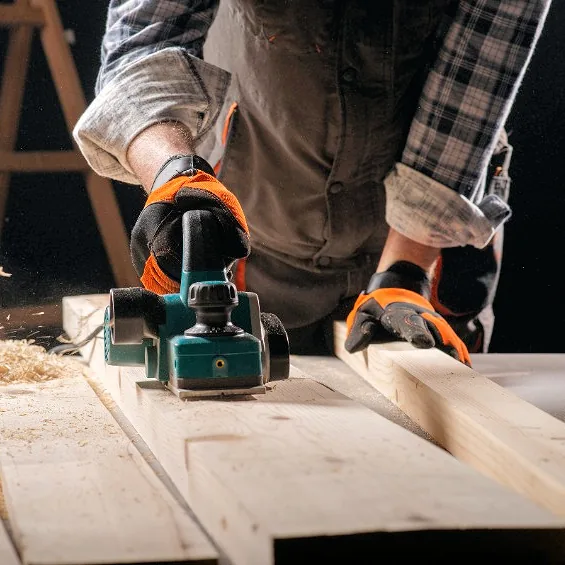
Think of this as a stay-on switch. Once the worker turns the tool on, the tool continues operating until the worker intentionally turns it off.
For example, a worker using a router may switch the router on before guiding it through the workpiece. The worker does not have to continuously squeeze a trigger to keep the motor running. When the cut is complete, the worker deliberately switches the router off.
Because the tool can continue running after the worker releases the control, the operator must maintain control of the tool and be prepared to switch it off when the work is completed, when the tool is set down, or when an unsafe condition develops. Workers should also make sure the switch is in the off position before connecting the tool to a power source. This helps prevent unexpected startup. Click on the link below to see a list of the tools that require positive "on-off" control.
- Hand-held powered platen sanders
- grinders with wheels 2 inches in diameter or less
- routers
- planers
- laminate trimmers
- nibblers
- shears
- scroll saws
- jigsaws with blade shanks ¼-inch wide or less
Knowledge Check Choose the best answer for the question.
2-3. What type of control allows the tool to continue to operate without the worker having to hold or maintain pressure on the switch?
You forgot to answer the question!