
Perforation, Fracturing Fluid, Blending, and Pumping
Hydraulic fracturing begins with a carefully coordinated sequence of operations that prepares the well for stimulation and helps maximize the flow of oil or natural gas from the formation.
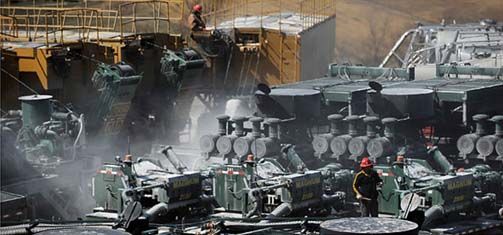
The main stages include perforation, preparation of fracturing fluid, blending, and pumping.
1. Perforation
The first step is to perforate the well casing. Perforating is accomplished by lowering a perforating gun into the well to the desired depth. This tool uses small explosive charges to pierce the steel casing, cement, and into the surrounding formation. The shaped charges create small tunnels through the casing and cement into the surrounding formation. These tunnels provide pathways for fracturing fluid to enter the formation during stimulation and for oil or natural gas to flow into the wellbore after the treatment.
2. Fracturing Fluid
Once the casing is perforated, the well is ready for the introduction of fracturing fluid. This fluid is specially designed to create and maintain fractures in the rock formation. It typically consists of three main components:
- Base fluid – usually water. In some specialized applications, other fluids may be used depending on the formation and treatment design.
- Proppant – such as sand or ceramic pellets, which hold fractures open once they are created
- Chemical additives – used to reduce friction, control bacteria, prevent corrosion and scale, adjust fluid properties, and improve the transport of proppant.
These ingredients are combined just before being pumped into the well.
3. Blending
During the blending stage, the base fluid, proppants, and chemicals are mixed together using specialized equipment called blenders. The blending process must be precisely controlled to ensure proper consistency and performance of the fracturing fluid. The blending process is continuously monitored to ensure the correct proportions of fluid, proppant, and additives are delivered according to the treatment design.
4. Pumping
After blending, the fracturing fluid is pumped into the well through high-pressure lines using powerful pumping units. These pumps generate the pressure needed to force the fluid downhole and create fractures in the targeted formation. Pump pressure and flow rate are carefully controlled throughout the treatment to initiate and propagate fractures while continuously monitoring surface equipment and well conditions. This pumping process may last several hours, depending on the complexity of the well and formation characteristics.
Modern horizontal wells are typically fractured in multiple stages. After one stage is completed, additional perforations are made farther along the wellbore, and the process is repeated until the entire production zone has been stimulated.
Understanding these four stages provides a foundation for recognizing the hazards associated with hydraulic fracturing operations. The following sections describe common hazards and the safety practices used to control them.
Knowledge Check Choose the best answer for the question.
2-5. What is the process called that involves piercing the casing wall and cement of a wellbore to create holes for formation fluids to enter?
You forgot to answer the question!