
Job Hazard Analysis (JHA)
A Job Hazard Analysis (JHA) is a structured safety technique that examines individual job tasks to identify hazards before an incident or injury occurs. Rather than focusing solely on the worksite, a JHA evaluates how specific tasks are performed and how hazards can arise from the interaction between the worker, the task, the tools and equipment used, and the surrounding work environment.
The primary goal of a JHA is prevention. Once hazards that are uncontrolled or inadequately controlled are identified, corrective actions can be implemented to eliminate the hazard where feasible or reduce the risk to an acceptable level through engineering controls, administrative controls, safe work practices, or the use of appropriate personal protective equipment (PPE).
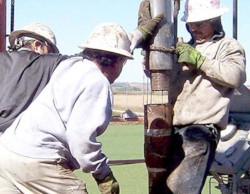
A JHA should be conducted for all hazardous jobs and non-routine procedures to determine potential safety and health hazards and to identify practical methods for reducing or controlling employee exposure. At oil and gas wellsites, JHAs are especially important due to changing conditions, multiple contractors, and high-risk activities such as equipment operation, material handling, hot work, and confined space entry.
A basic Job Hazard Analysis follows a systematic process that breaks the job into manageable steps and evaluates each step individually. The core steps in a JHA include:
- List each step of the job or procedure in the order it is performed.
- Identify and describe the potential safety and health hazards associated with each step, including those related to equipment, materials, environmental conditions, and human factors.
- Develop and document preventive measures or controls to eliminate the hazard or reduce the risk, using the hierarchy of controls where applicable.
- Write a clear and practical safe job procedure that incorporates the identified controls and can be communicated to affected workers.
JHAs should be reviewed with employees before work begins, updated when conditions or procedures change, and periodically evaluated to ensure they remain effective. Supervisors and workers should actively participate in the JHA process to improve accuracy, acceptance, and overall safety performance.
You can learn more about conducting a JHA in course 706 Conducting a Job Hazard Analysis.
Knowledge Check Choose the best answer for the question.
4-4. Which of the following is the first step in the JHA process?
You forgot to answer the question!