
Fire and Electrical Hazards
Fire and Explosions on Barges
Fire and explosions on a barge can be caused by many different factors.
- flammable and combustible cleaning solvents, such as Methyl Ethyl Ketone (MEK), mineral spirits, and diesel fuel/oil
- liquids with high flash points (greater than 100º F) applied as a fine mist
These incidents are dangerous and can lead to serious injuries, damage to property, or even loss of life. Understanding the common causes helps workers stay alert and take proper safety steps.
Flammable and Combustible Cleaning Solvents
Solvents such as Methyl Ethyl Ketone (MEK), mineral spirits, and diesel fuel or oil are highly flammable or combustible. If these are used during cleaning or maintenance, they can release vapors that easily ignite. For example, using MEK to clean equipment in a poorly ventilated area could result in an explosion if someone lights a cigarette nearby.
Liquids with High Flash Points
Some liquids have flash points greater than 100º F, meaning they do not catch fire easily under normal conditions. However, if sprayed as a fine mist, these liquids can become explosive. For example, spraying heated hydraulic fluid in a mist form near a hot surface can ignite and cause a fire.
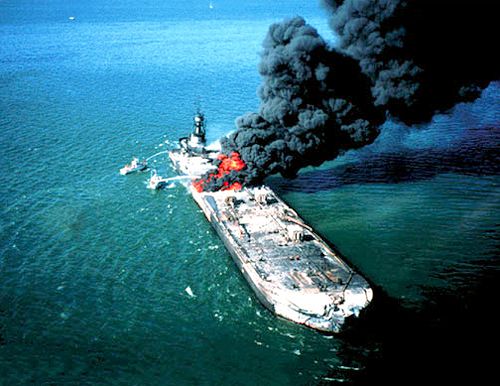
Large Tanker Fire at Sea
Fires on large tankers at sea can spread quickly and become uncontrollable. If a barge is near a burning tanker, it can be affected by radiant heat or flaming debris. This type of incident shows how fire hazards are not always caused directly by the barge's own equipment or materials.
Airborne Particulate or Dust
Dust or fine particles from cargo like grain, coal, or certain chemicals can catch fire if they build up in the air. A small spark from equipment or static electricity can cause an explosion. For instance, iron dust from grinding metal on deck can create a flammable cloud if not properly controlled.
Hydrogen Gas Generated During Cleaning
During tank or line cleaning, hydrogen gas can be produced as a byproduct. This gas is very flammable and can explode if mixed with air and exposed to a spark. A worker using high-pressure water jets in a closed tank might unknowingly create a hazardous atmosphere.
Reactive Cargoes
Certain cargoes like iron ore, fertilizer, or incompatible chemicals can react with each other or with moisture in the air. These reactions can release heat or flammable gases. For example, if ammonium nitrate fertilizer gets wet, it can become unstable and potentially explode.
Fuel Storage
Fuel used for engines or gas tanks must be stored properly. Tanks must be kept away from sources of ignition like open flames or hot surfaces. Barges must only carry the amount of flammable or combustible materials needed for daily operations. Appropriate danger signs must be posted in fuel storage areas to warn workers and visitors of the fire risk.
Accident Summary
A towing vessel was pushing two deck barges to a pile-driving location off the Louisiana coast. While the vessels were underway, a spud on one of the barges suddenly dropped into the water from its raised position.
The spud struck and ruptured a buried high-pressure natural gas pipeline. The gas ignited and created a fireball that engulfed the towing vessel and both barges.
The master of the towing vessel and four barge employees were killed, and one barge employee was listed as missing.
Knowledge Check Choose the best answer for the question.
6-1. Fire and explosions on barges may be caused by liquids _____.
You forgot to answer the question!