
Electrical Hazards
Employees working on barges and other vessels face higher risks of electrical shock or electrocution, especially in wet or damp areas.
Barge Grounding Clamp and Cable
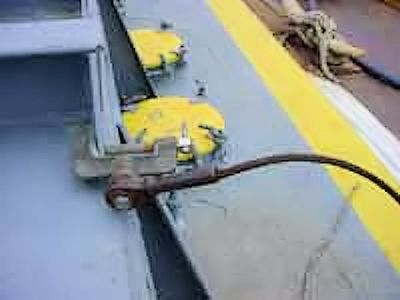
These hazards are more severe because water increases the conductivity of electricity, making accidental contact with electrical equipment more dangerous. Below are common sources of electrical hazards found during barge operations, along with examples:
- Exposed energized electrical parts: Electrical panels or junction boxes that are not properly sealed can have live wires or terminals visible. For example, an uncovered circuit breaker panel on a barge deck can shock a worker who accidentally touches it.
- Open lighting parts: Lighting fixtures with missing covers or broken bulbs can expose conductors. A broken floodlight near a work area can create a risk of electric shock if a worker comes in contact with the exposed parts.
- Damaged insulation on power cords: Extension cords and power tools often get worn or cut. If the insulation is damaged, wires can become exposed. For instance, using a power drill with a frayed cord on a wet deck can lead to serious injury.
- Barge grounding clamp and cable: If the barge is not properly grounded using a grounding clamp and cable, a buildup of static or stray electricity can result in sparks. For example, connecting or disconnecting equipment without grounding the barge first could ignite flammable vapors.
Electrical equipment must not be used on hot barges (barges that have contained flammable or combustible materials such as gasoline, methanol, styrene, or toluene) unless it is explosion proof or intrinsically safe. These types of equipment are designed to prevent sparks or heat that could ignite vapors.
Non-explosion proof or non-intrinsically safe equipment may only be used after the barge has been certified as gas-free. This means the air in and around the barge has been tested and confirmed to have no flammable gases or vapors.
Knowledge Check Choose the best answer for the question.
6-3. What makes electrical hazards on barges more dangerous than on dry land?
You forgot to answer the question!