
Sound Design
A scaffold must be designed and built strong enough to safely support the loads placed on it.
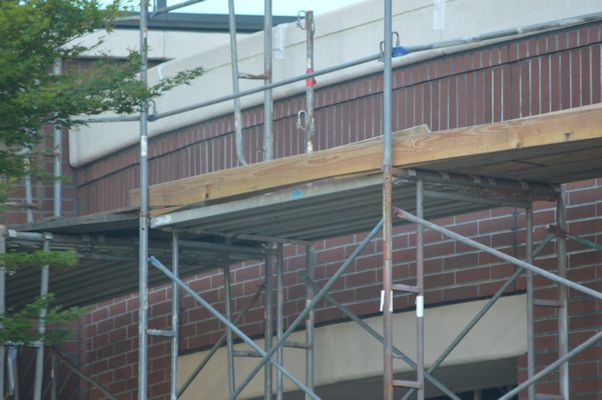
Each scaffold and scaffold component must be capable of supporting, without failure, its own weight and at least four times the maximum intended load applied or transmitted to it.
For example, if the total weight expected on a scaffold is 500 pounds, the scaffold must be able to support a load of at least 2,000 pounds. This safety factor helps protect workers from scaffold collapse due to unexpected shifts in weight or overloading.
Suspension scaffolds must meet even stricter requirements. The ropes used to hold up the scaffold must be capable of supporting at least six times the maximum intended load. This ensures stability while the scaffold is suspended in the air and prevents failure under stress.
Guardrails are also an important part of scaffold design. The top rail must be able to withstand a force of at least 200 pounds, and the midrail must hold at least 100 pounds. These requirements help keep workers safe from falling off the scaffold during regular work activities.
For complex or custom scaffold systems—especially on large construction projects or unusual building shapes—an engineer may be needed to help determine the correct load limits and design features. This ensures the structure remains stable and safe for everyone working on it.
Knowledge Check Choose the best answer for the question.
1-9. How much weight should a scaffold be able to support?
You forgot to answer the question!