
Identifying Hazards
Introduction
The first step in controlling workplace hazards is to first identify them. We want to determine what hazards are present.
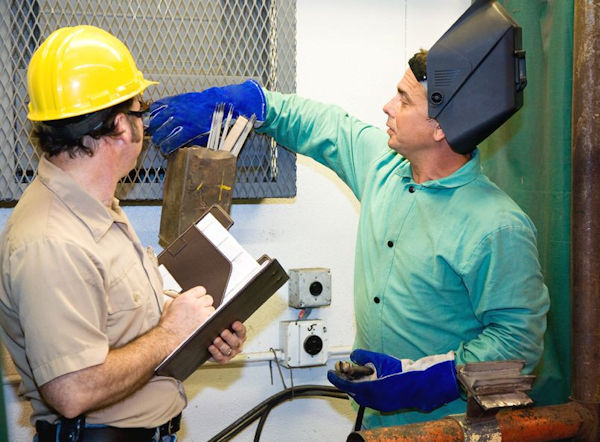
Once hazards are identified, you'll conduct an analysis to examine more closely the nature of the hazard. You want to know what it looks like, what kind of accidents might it cause, and how severe the resulting injuries might be. Analysis requires that each item or component be examined to see how it relates to or influences the whole.
Safety inspections should do more than simply identify hazardous conditions. They should provide useful data for the purpose of effective analysis and evaluation of the safety management system.
There are five basic methods you can use to identify workplace hazards before an accident occurs:
- informal observations and formal observation programs;
- comprehensive company-wide surveys;
- individual interviews;
- walk-around inspections; and
- documentation review.
As we'll learn, observing work each day is extremely important in identifying hazards. Surveys take advantage of employee awareness of the presence of workplace hazards. Interviews are valuable in uncovering hazardous conditions, unsafe work practices, and their root causes. Walk-around inspections are useful to locate hazardous conditions and, to a lesser degree, unsafe work practices in the workplace. Reviewing documentation such as the OSHA 300 Log, safety committee minutes, and accident reports also helps to determine workplace hazards. Now, let's take a look at each of these five methods or "tools" to identify hazards.
Real-Life Example: Hazard Identification Prevents Serious Harm (Oregon OSHA — December 2025)
The first step in controlling workplace hazards is identifying them early—before they turn into injuries, fatalities, or enforcement actions. A real-world Oregon OSHA inspection in December 2025 shows what happens when hazards are visible, but not properly recognized, documented, and corrected.
During an inspection at a manufacturing facility, officials found multiple hazards tied to material storage and equipment guarding. Industrial storage racks used to hold heavy raw materials were improperly installed and maintained. Several baseplates were not anchored to the floor, some rack components were damaged, and others were installed incorrectly. Heavy materials were stored high on these racks and accessed by employees both manually and with forklifts, creating struck-by and crushing hazards—materials could shift, fall, or collapse onto workers. Inspectors also identified a belt sander with unguarded moving parts, creating a risk of hand or finger injuries.
No injuries or fatalities were reported at the time. However, hazard identification is about recognizing what could happen. Rack failure, falling loads, or contact with moving machine parts can easily result in severe injury or death if conditions are left uncorrected.
Oregon OSHA determined the employer willfully violated safety requirements by knowingly leaving the faulty storage system in service. A second violation was issued for the unguarded machine. The employer was ordered to correct the hazards and was fined $28,478 total.
Methods to Identify Workplace Hazards Before an Accident Occurs:
- Informal observations and formal observation programs (watch daily work practices, especially loading/unloading and storage tasks).
- Comprehensive company-wide surveys (ask employees where they see unstable racks, damaged components, or unsafe forklift activity).
- Individual interviews (capture specific examples of near misses, shifting loads, or equipment workers avoid because it feels unsafe).
- Walk-around inspections (verify racks are anchored, undamaged, correctly installed, and that machine guards are in place).
- Documentation review (check maintenance records, hazard reports, corrective action logs, and prior inspection findings for repeat issues).
This example reinforces a simple reality: safety inspections should do more than spot problems. They should produce usable information, trigger corrective action, and confirm fixes are completed—so known risks don’t remain in place long enough to hurt someone.
Knowledge Check Choose the best answer for the question.
3-1. What is the first step in controlling workplace hazards?
You forgot to answer the question!