
Write the Report
After investigators have gathered the facts, analyzed the causes, and developed recommendations, the findings should be documented and communicated to those who have the authority to take action.
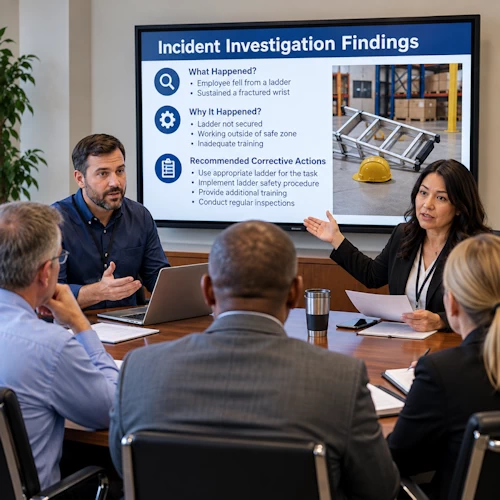
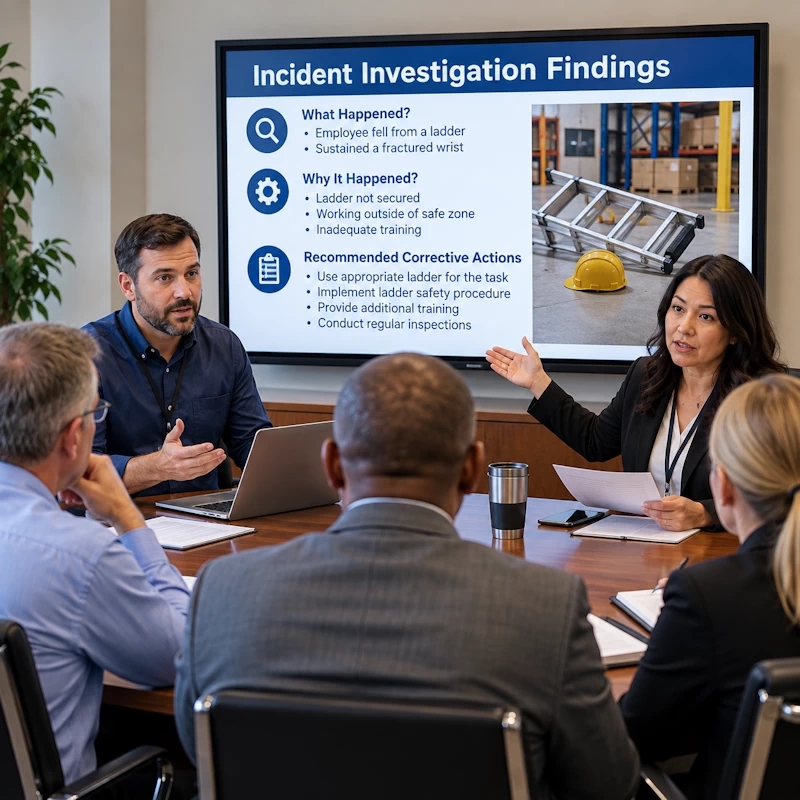
A well-written incident investigation report explains what happened, why it happened, and what needs to change. It should provide enough information for decision-makers to understand the findings, evaluate the recommendations, and implement appropriate corrective actions. In this module, we'll discuss how to organize and communicate the results of the incident investigation and analysis.
Be Objective and Accurate
An effective report is based on evidence. Clearly distinguish established facts from assumptions, opinions, and conclusions. Findings should be supported by information gathered during the investigation, such as physical evidence, photographs, interviews, records, and other documentation.
Avoid conclusions such as “the employee should have used common sense” or “the employee was careless.” Statements like these do not explain why the incident occurred or identify the system improvements needed to help prevent recurrence.
Employee actions may be relevant findings, but the report should not stop with those actions. Explain the conditions, contributing factors, and underlying system weaknesses identified during the analysis.
The report should connect the evidence to the findings, the findings to the causes, and the causes to corrective actions.
A completed report is not the end of the prevention process. Findings and recommendations should be communicated to the appropriate people so corrective actions can be implemented, tracked, and evaluated for effectiveness.
Knowledge Check Choose the best answer for the question.
8-1. What should an effective investigation report connect?
You forgot to answer the question!