
Protective Systems
All excavations are hazardous because they are inherently unstable.
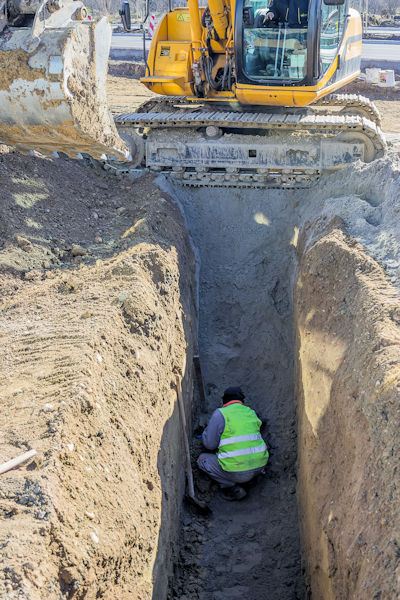
Excavations can also present risks from oxygen depletion, toxic fumes, and water accumulation. Without protective systems or equipment, workers in trenches or excavations are in danger of suffocation, toxic exposure, fire, drowning, or being crushed by a cave-in.
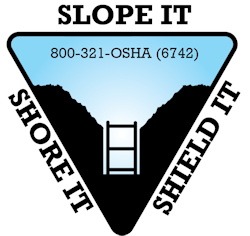
Three common types of protective systems are used.
- Sloping involves cutting back the trench wall at an angle inclined away from the excavation.
- Shoring requires installing aluminum hydraulic or other types of supports to prevent soil movement and cave-ins.
- Shielding protects workers by using trench boxes or other types of supports to prevent soil cave-ins.
Designing a protective system can be complex because you must consider many factors: soil classification, depth of cut, water content of the soil, changes due to weather or climate, surcharge loads (for example, spoil and other materials to be used in the trench), and other operations in the vicinity.
Knowledge Check Choose the best answer for the question.
2-2. Which protective system requires installing aluminum hydraulic or other types of supports to prevent soil movement and cave-ins?
You forgot to answer the question!