
Analyze for Excavation Hazards
The primary hazard of trenching and excavation is employee injury from trench or wall collapse. Cave-ins pose the greatest risk, and without proper protective systems in place, workers can be seriously injured or killed in seconds.
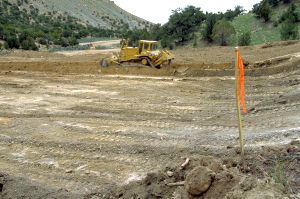
To prevent collapse, soil analysis is critical. It helps determine the appropriate protective measures such as sloping (cutting back trench walls at an angle), benching (creating steps), or shoring (installing supports to prevent soil movement). The type of soil—stable rock, Type A, B, or C—greatly influences which method is used.
Employers must ensure that a competent person inspects excavations and adjacent areas daily, and as conditions change, to identify potential hazards like soil movement, water accumulation, or atmospheric risks.
Additional hazards in trenching and excavation work include the operation of heavy machinery near the excavation site, manual handling of heavy materials, working close to vehicular traffic, and exposure to underground or overhead utilities. Contact with electrical lines or natural gas pipelines can lead to electrocution, explosion, or fire.
Knowledge Check Choose the best answer for the question.
5-10. Which of the following is the primary hazard of trenching and excavation on a project?
You forgot to answer the question!