
Working on Elevated Surfaces
Working on elevated surfaces on barge decks presents serious fall hazards. Elevated areas may include machinery platforms, tank tops, ladders, scaffolding, or other structures raised above the main deck. Falls from these heights can cause serious injuries such as broken bones, head trauma, or even death.
Hazards of Elevated Surfaces
- Slippery surfaces caused by water, oil, or other substances
- Improper use of ladders or steps
- Missing or damaged guardrails
- Unmarked elevation changes or open hatches
- Using unstable or makeshift climbing equipment
- Poor visibility due to lighting or weather conditions
Control Measures to Reduce the Risk of Falling
- Install guardrails around elevated work areas to provide a physical barrier against falls
- Use ladders that are secured and in good condition; maintain three points of contact at all times
- Wear Personal Fall Arrest Systems (PFAS) when working in areas without guardrails or when required by regulations
- Mark elevation changes clearly with contrasting paint or signage
- Cover or guard all deck openings, holes, and hatches to prevent stepping or falling into them
- Ensure that all walking surfaces are non-skid and kept clean and dry
- Use adequate lighting during night work or poor weather to improve visibility
Examples of Safe Practices That Prevented Falls
- During maintenance on an elevated pump platform, a worker used a properly fitted fall arrest harness attached to an overhead anchor point. When the worker slipped on a wet patch, the harness stopped a fall that could have resulted in a serious back injury.
- A crew replaced missing guardrails around a raised tank top before allowing workers to climb onto it. This prevented a fall when a worker tripped over a hose lying across the surface.
- At night, workers used portable light towers and headlamps while accessing an elevated catwalk. The clear visibility helped them avoid tripping on equipment and maintain safe footing.
By recognizing hazards and applying control measures, barge crews can safely work on elevated surfaces and reduce the risk of injuries caused by falls to lower levels on deck.
Accident Summary
A cement handler was fatally injured when he fell through an open hatch on a barge while attempting to cover a dust collection hatch with a tarp. He landed on the barge floor 20 feet below.
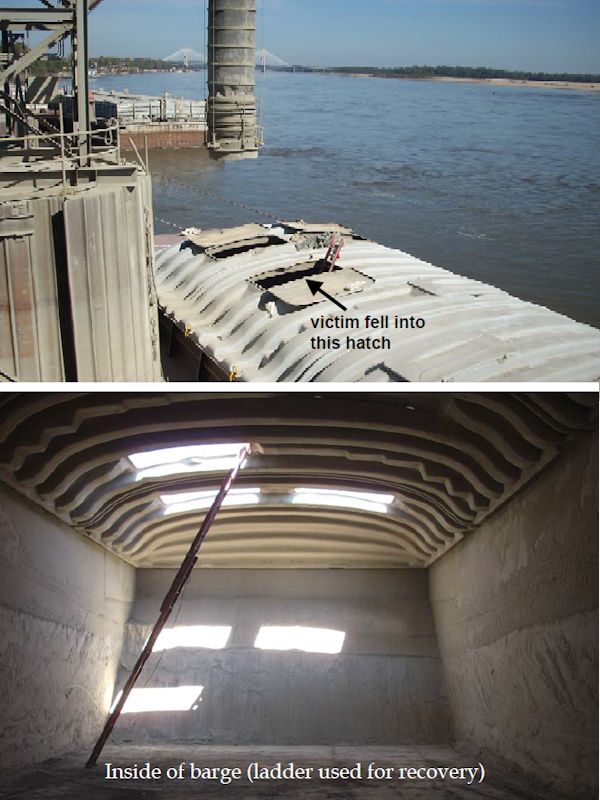
The accident occurred because management policies and procedures did not require that persons working on barges wear fall protection while working near open hatches.
A risk assessment to identify hazards and establish safe procedures had not been conducted to protect persons loading material on barges.
Knowledge Check Choose the best answer for the question.
2-5. What is a common hazard when working on elevated surfaces like tank tops or platforms?
You forgot to answer the question!