
Radiation Exposure
Radiation may be defined as energy traveling through space. The most familiar source of electromagnetic (EM) radiation is sunlight, which provides light and heat. Sunlight consists primarily of radiation in infrared (IR), visible, and ultraviolet (UV) frequencies. Lasers also emit EM radiation at these optical frequencies.
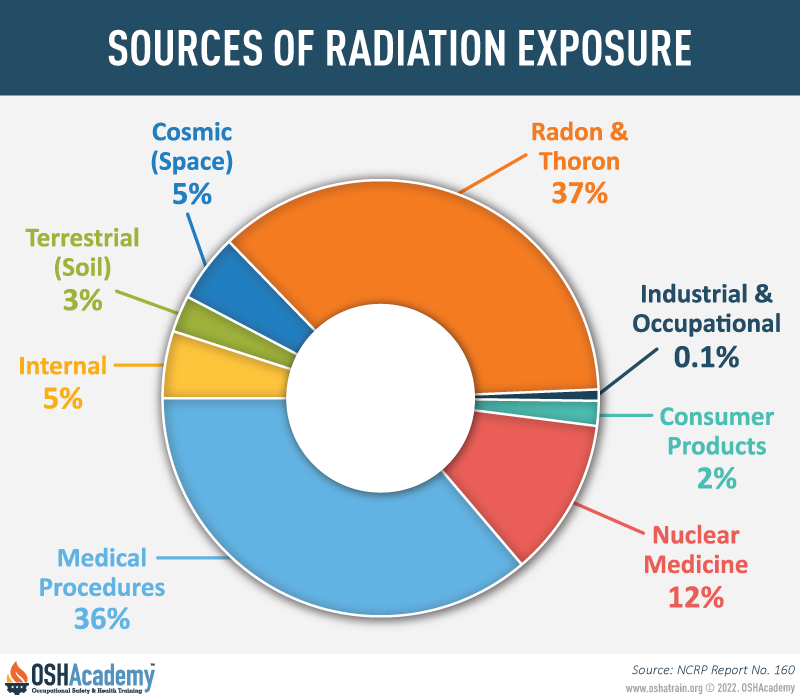
- Ionizing radiation: Ionizing radiation includes particulate radiation (alpha, beta, and neutron particles) and electromagnetic radiation (X-rays and gamma rays).
- Non-ionizing radiation: Non-ionizing radiation includes ultraviolet (UV), visible light, infrared (IR), microwave (MW), radio frequency (RF), and extremely low frequency (ELF) radiation.
Ionizing radiation deposits energy in body tissue, which can cause cell damage or cell death. In some cases, there may be no noticeable effect. In other cases, a cell may survive but become abnormal, either temporarily or permanently. An abnormal cell may become malignant.
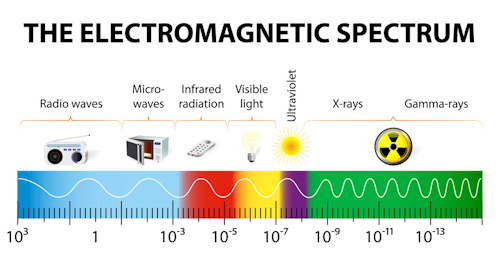
Both large and small doses of ionizing radiation can cause cellular damage. The extent of the damage depends on the total amount of energy absorbed, the duration and dose rate of the exposure, and the particular organs exposed.
- Chronic exposure is continuous or intermittent exposure to low doses of radiation over a long time. Health effects are delayed and can include cancer and other health outcomes such as benign tumors, cataracts, and potentially harmful genetic effects.
- Acute exposure is exposure to a large, single dose of radiation or a series of moderate doses received during a short time. Large acute doses can result from accidental or emergency exposures or from specific medical procedures (radiation therapy).
Knowledge Check Choose the best answer for the question.
2-8. The extent of damage from ionizing radiation depends on which of the following factors?
You forgot to answer the question!