
Hand Protection
It's important that employers select and require employees to use appropriate hand protection when exposed to any of the hazards listed below:
- hazardous chemicals that can cause burns, rashes, and internal injury;
- cuts or lacerations;
- abrasions;
- punctures;
- thermal burns; and
- harmful temperature extremes.
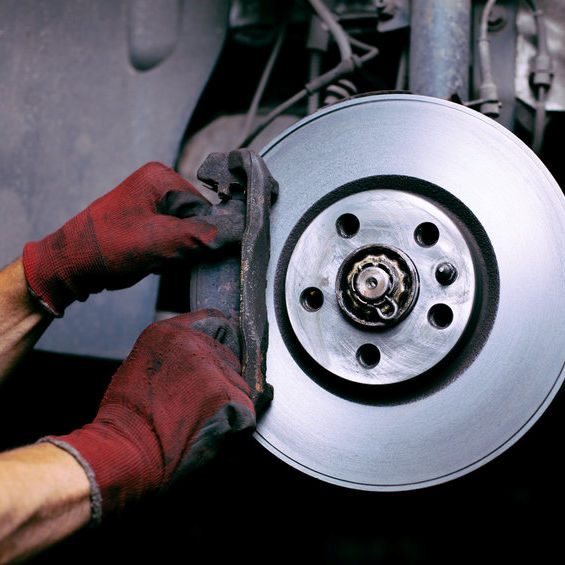
Make sure safety gloves are the correct type for the specific substance.
Glove Guide
Below is a guide to the most common types of protective work gloves and the types of hazards they can guard against:
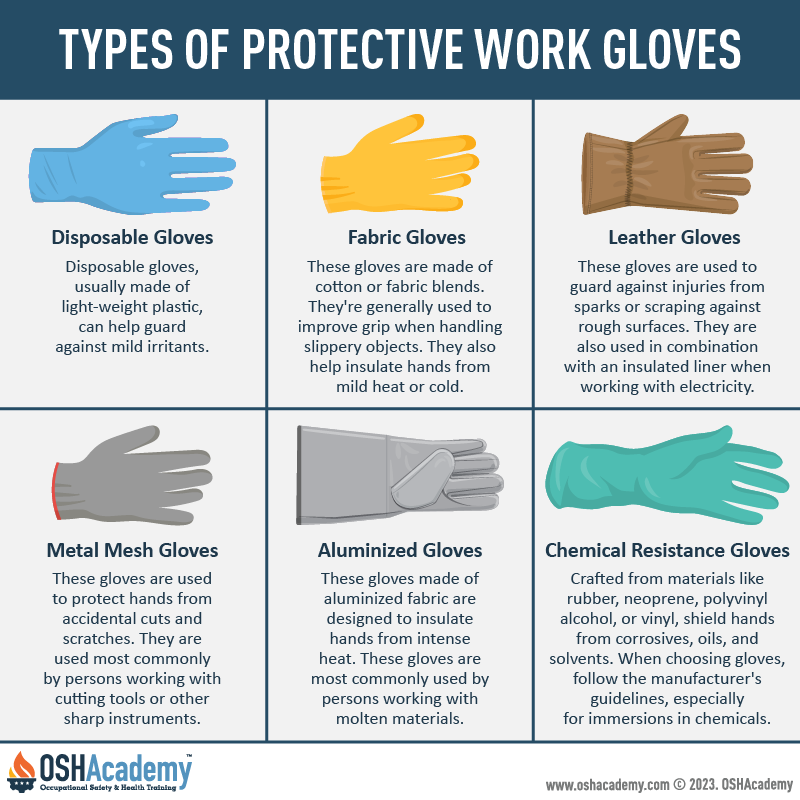
- Disposable Gloves: Disposable gloves, usually made of lightweight plastic, can help guard against mild irritants.
- Fabric Gloves: These gloves are made of cotton or fabric blends. They're generally used to improve grip when handling slippery objects. They also help insulate hands from mild heat or cold.
- Leather Gloves: These gloves are used to guard against injuries from sparks or scraping against rough surfaces. They are also used in combination with an insulated liner when working with electricity.
- Metal Mesh Gloves: These gloves are used to protect hands from accidental cuts and scratches. They are used most commonly by persons working with cutting tools or other sharp instruments.
- Aluminized Gloves: These gloves, made of aluminized fabric, are designed to insulate hands from intense heat. They are most commonly used by persons working with molten materials.
- Chemical-Resistant Gloves: These gloves may be made of rubber, neoprene, polyvinyl alcohol, vinyl, or other materials. The gloves protect hands from corrosives, oils, and solvents. When selecting chemical-resistant gloves, be sure to consult the manufacturer's recommendations, especially if the gloved hand will be immersed in the chemical.
Knowledge Check Choose the best answer for the question.
2-3. What kind of gloves would you wear if you had to come into contact with very sharp cutting tools?
You forgot to answer the question!