
Exposure to Falling Loads
Employees must be protected from loads or objects falling from lifting or digging equipment.
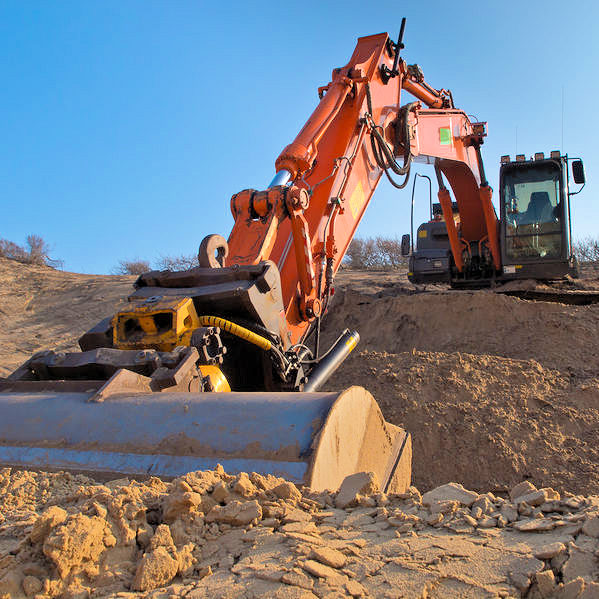
Here are some procedures to protect your employees:
- Employees are not permitted to work under raised loads
- Employees are required to stand away from the equipment that is being loaded or unloaded
- Equipment operators or truck drivers may stay in their equipment during loading and unloading, if the equipment has a cab shield or adequate canopy
Warning Systems for Mobile Equipment
The following steps should be taken to prevent vehicles from accidentally falling into the trench:
- Barricades must be installed where necessary.
- Hand or mechanical signals must be used as required.
- Stop logs must be installed if there is a danger of vehicles falling into the trench.
- Soil should be graded away from the excavation; this will assist in vehicle control and channeling of run-off water.
During an excavation project, a worker was positioned inside a trench box providing hand signals to an excavator operator while material was being handled near the trench. While the excavator was operating, the bucket unexpectedly detached from the arm and dropped into the work area, crushing the worker’s lower body.
In an attempt to remove the bucket, the operator used the excavator’s hydraulic arm to lift it. The bucket shifted and slipped during the lift, resulting in a second crushing event before emergency responders were able to safely access and rescue the worker. The worker required a prolonged hospitalization and suffered severe injuries.
A post-incident equipment check found that multiple excavators in the fleet lacked required bucket retention/safety latches, increasing the risk of falling loads during digging and lifting operations. The incident also reinforced the need for strict exclusion zones around active equipment, proper use of hand/mechanical signaling, and physical controls (such as barricades or stop logs) to prevent equipment movement toward trench edges.
This case highlights why excavation work must include controls for both falling-load exposure and mobile-equipment hazards:
- Employees must not work under raised loads and must remain clear of active loading/unloading zones.
- Only equipment with appropriate protective features (such as cab shields or adequate canopies) should be used when operators remain in the cab during loading/unloading.
- Hand or mechanical signals must be used as required and coordinated to maintain clear separation between workers and moving equipment.
- Barricades and stop logs should be installed where needed to prevent vehicles or equipment from approaching or falling into the trench.
- Soil should be graded away from the excavation to improve vehicle control and reduce runoff into the work area.
Look carefully at the picture.
Exercise Picture
![[Alt-Title]](images/802_6_4_trench_backhoe.png)
What questions should a competent person ask when evaluating the hazards?
- Do you see any hazards and unsafe behaviors?
- What is the soil classification (hint, the soil has been worked previously)?
- Are those workers in the trench safe from cave-ins?
- Is there a dangerous hazard of being struck by falling objects?
- Is that supervisor being responsible, or does he have a total lack of consideration for the safety of his employees?
- What violations would you cite if you were an OSHA inspector?
What other questions might you ask?
Knowledge Check Choose the best answer for the question.
6-4. Which of the following practices is not allowed while working in a trench?
You forgot to answer the question!