
Types of Contamination
Contaminants can be located either on the surface of personal protective equipment or permeated into the PPE material.
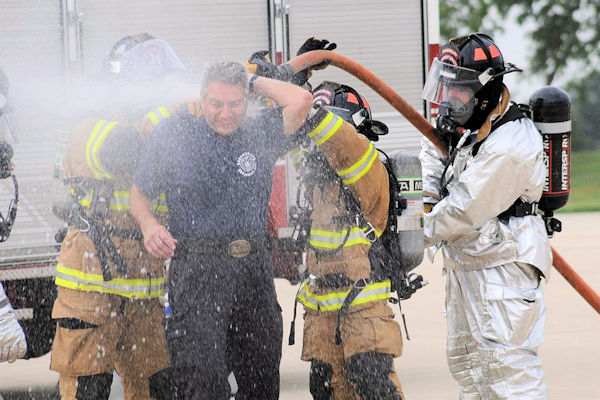
Surface Contamination
Surface contaminants are hazardous substances that remain on the outside of equipment, tools, clothing, or protective materials.
These contaminants are often easier to identify through visual inspection, monitoring instruments, or sampling methods. In many cases, they can be removed through proper decontamination procedures such as washing, rinsing, wiping, or using appropriate cleaning solutions.
However, when hazardous substances penetrate or permeate a material—such as certain chemicals soaking into fabrics, rubber, or plastics—they may be difficult or impossible to detect and remove. Once permeation occurs, the material may no longer provide effective protection and may need to be discarded.
Permeated Contamination
If contaminants that have permeated a material are not removed by decontamination, they may continue to permeate to surfaces of the material where they can cause an unexpected exposure.
Five major factors affect the extent of permeation:
- Contact time: The longer a contaminant is in contact with an object, the greater the probability and extent of permeation. For this reason, minimizing contact time is considered one of the most important objectives of a decontamination program.
- Concentration: Molecules flow from areas of high concentration to areas of low concentration. As concentrations of wastes increase, the potential for permeation of personal protective clothing increases.
- Temperature: An increase in temperature generally increases the permeation rate of contaminants.
- Size of contaminant molecules and pore space: Permeation increases as the contaminant molecule becomes smaller, and as the pore space of the material to be permeated increases.
- Physical state of wastes: As a rule, gases, vapors, and low-viscosity liquids tend to permeate more readily than high-viscosity liquids or solids.
Knowledge Check Choose the best answer for the question.
12-4. What is considered one of the most important objectives of a decontamination program?
You forgot to answer the question!